
Polyvagal Theory for Breathwork Professionals
In This Article
- A Simple Polyvagal Overview
- The Three Polyvagal States
- Polyvagal Development And Early Experience
- The Sympathetic–Dorsal Vagal Loop
- Supporting Safety In Breathwork Spaces
- How Breathwork Can Support Regulation And Trauma Recovery
- Everyday Ways To Support Your Nervous System
- Trauma-Informed Breathwork With Breathing Space
The nervous system is remarkably good at adapting. It learns, over time, how to keep us safe in the environments and relationships we find ourselves in. When those environments are supportive, the nervous system tends to organise around connection, curiosity, and flexibility. When they’re overwhelming or unpredictable, it adapts in other ways.
Polyvagal Theory offers a helpful framework for understanding these adaptations.
Originally developed by Stephen Porges, Polyvagal Theory expands our understanding of the autonomic nervous system by placing safety, connection, and threat at the centre of how we interpret emotional and physiological responses.
For breathwork professionals, this perspective can be particularly useful. Breathwork works directly with the autonomic nervous system, often bypassing cognitive strategies altogether. That means it can support regulation, but it can also reveal underlying patterns of stress, protection, or shutdown that a client may not be consciously aware of.
Polyvagal Theory helps make sense of these responses. It offers language for understanding why certain breathing practices feel supportive for some people and unsettling for others, why a sense of connection can shift so quickly, and why regulation is rarely about staying calm all the time.
A Simple Polyvagal Overview
At its core, Polyvagal Theory is an expanded way of understanding how the autonomic nervous system responds to safety and threat.
Most people are familiar with the idea that we have a sympathetic nervous system (often described as fight or flight) and a parasympathetic nervous system (often associated with rest and relaxation). Polyvagal Theory builds on this by offering a more nuanced view of how these systems operate, particularly through the role of the vagus nerve and the body’s capacity for social engagement.
Rather than seeing the nervous system as a simple on–off switch between stress and calm, Polyvagal Theory describes a system that is constantly scanning the environment for cues of safety or danger. This process happens automatically, beneath conscious awareness, and strongly shapes emotional responses, behaviour, and physiology.
From a polyvagal perspective, the nervous system is organised around one central question: “Am I safe?”
The answer to that question influences:
heart rate and breathing patterns
muscle tone and posture
facial expression and vocal tone
emotional regulation and social connection
how the body responds to stress
This is why two people can experience the same situation very differently. One nervous system may register safety and remain regulated, while another may interpret threat and shift into mobilisation or shutdown.
For breathwork professionals, this framework offers a deeper understanding of why breath-based practices can feel regulating for some clients and destabilising for others. It also explains why techniques that appear calming on the surface, such as deep breathing, don’t always produce a sense of safety in the body.
Polyvagal Theory doesn’t replace earlier models of the nervous system. Instead, it adds depth. It helps explain how the parasympathetic nervous system itself contains different pathways, each with distinct effects on emotional regulation, social engagement, and trauma recovery.
Importantly, Polyvagal Theory is descriptive, not prescriptive. It doesn’t tell us what state someone should be in. It helps us notice where the nervous system is organising right now, and what might support a sense of safety and connection in that moment.
The Three Polyvagal States
Polyvagal Theory describes three primary ways the nervous system organises itself in response to safety and threat. These are not fixed states or traits. They are dynamic patterns that shift throughout the day, often without conscious awareness.
Each state has a purpose and plays a role in survival. And each can be supportive or challenging depending on context, duration, and flexibility.
The Ventral Vagal State: Safety And Social Engagement
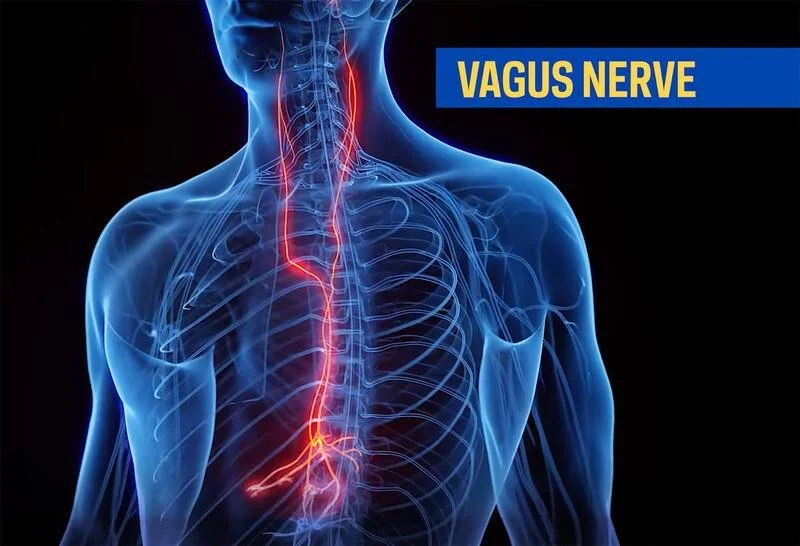
The ventral vagal state is associated with a felt sense of safety and connection. It is mediated by the ventral branch of the vagus nerve, a key part of the parasympathetic nervous system, and supports what Polyvagal Theory refers to as the social engagement system.
When someone is primarily in a ventral vagal state, the nervous system registers enough safety to allow connection with others and with the present moment.
This state commonly supports:
emotional regulation
social engagement and communication
curiosity, creativity, and learning
flexible thinking and responsiveness
Physiologically, ventral vagal regulation is often reflected in:
steady heart rate and healthy heart rate variability
easy, responsive breathing
relaxed facial muscles and vocal tone
a sense of being “here” rather than braced or withdrawn
This is often the state clients are hoping to access, but it’s important to remember that ventral vagal regulation is not something we can force. It emerges when the nervous system experiences enough safety, not when we instruct someone to relax.
The Sympathetic State: Mobilisation And Protection
The sympathetic state is the nervous system’s mobilisation response. It is commonly associated with fight and flight, and is governed by the sympathetic nervous system.
This state prepares the body for action. Heart rate increases, breathing becomes faster or shallower, and energy is mobilised toward responding to perceived threat or challenge.
In everyday life, sympathetic activation may support:
focus and alertness
motivation and goal-directed behaviour
responding to deadlines or challenges
protecting boundaries
This is not a “bad” state. In fact, healthy nervous systems move in and out of sympathetic activation regularly. Problems tend to arise when the system becomes stuck here, when stress is ongoing and there is no opportunity to downshift.
In breathwork spaces, sympathetic activation may show up as:
rapid or forceful breathing
restlessness or agitation
heightened emotional responses
difficulty settling into slower practices
From a polyvagal perspective, the goal is to support the nervous system in recognising when mobilisation is no longer needed.
The Dorsal Vagal State: Shutdown And Conservation
The dorsal vagal state is mediated by the dorsal branch of the vagus nerve and represents the nervous system’s shutdown response. It emerges when safety feels out of reach and mobilisation no longer seems possible.
This state is often misunderstood and pathologised, but from a survival perspective it is deeply protective. It reduces metabolic demand and conserves energy in the face of overwhelming stress.
Dorsal vagal activation may be associated with:
low energy or fatigue
emotional numbness or withdrawal
dissociation or detachment
slowed heart rate and shallow breathing
a sense of collapse or heaviness
In modern life, prolonged dorsal vagal states can be linked with experiences often labelled as depression, shutdown, or chronic exhaustion. From a polyvagal lens, these are adaptive nervous system responses to perceived overwhelm.
For breathwork professionals, it’s especially important to recognise dorsal vagal patterns. Practices that involve strong activation or intense emotional processing may feel unsafe or inaccessible from this state. Gentle, orienting, and stabilising approaches are often more supportive than “opening” or cathartic techniques.
One of the most important things Polyvagal Theory offers is the understanding that regulation is not about staying in one state. A healthy autonomic nervous system is flexible which means it’s able to move between mobilisation, rest, and connection as circumstances change.
Polyvagal Development And Early Experience
Polyvagal patterns don’t emerge in isolation. They are shaped over time through lived experience, particularly in early relationships and environments.
From infancy onward, the nervous system develops in response to cues of safety, connection, and threat. Ideally, a child’s autonomic nervous system is supported by caregivers who offer consistency, attunement, and co-regulation. Through repeated experiences of being soothed, seen, and responded to, the nervous system learns that connection is safe and that stress can be resolved.
This process supports the development of ventral vagal regulation, the capacity to move into states of safety, social engagement, and emotional regulation with relative ease.
When these conditions aren’t present, the nervous system adapts differently.
Children growing up in environments that are unpredictable, emotionally unavailable, overwhelming, or unsafe often learn that connection is unreliable. In response, the nervous system may organise around sympathetic mobilisation (constant vigilance, anxiety, hyperarousal) or dorsal vagal shutdown (withdrawal, numbness, collapse), depending on what offers the greatest protection.
Adults do not arrive with a “blank slate” nervous system. They are arriving with patterns that were learned early, reinforced over time, and often kept in place because they once worked.
This is why some people find it relatively easy to settle into slower breathing, relational connection, or present-moment awareness, while others find those same experiences unsettling or even threatening. The nervous system is responding not just to what’s happening now, but to what it has learned in the past.
Importantly, early experience doesn’t determine destiny. Polyvagal Theory emphasises plasticity, the nervous system’s ongoing capacity to learn from new experiences. Regulation, safety, and connection can be developed later in life, particularly through repeated, consistent experiences that support choice and agency.
The Sympathetic–Dorsal Vagal Loop
One common pattern shaped by early nervous system adaptation is what’s often described as the sympathetic–dorsal vagal loop.
In this pattern, the nervous system moves back and forth between mobilisation and shutdown, without spending much time in ventral vagal regulation. A person may swing between periods of anxiety, urgency, or hyperfocus and periods of exhaustion, numbness, or withdrawal.From the outside, this can look confusing or inconsistent. From a polyvagal perspective, it makes sense.
When a nervous system has learned that safety is unreliable, it may default to sympathetic activation as a way of staying alert and prepared. If that mobilisation doesn’t resolve the perceived threat, or becomes too costly to sustain, the system may drop into dorsal vagal shutdown to conserve energy. Over time, this high–low pattern can become familiar, even when the original conditions are no longer present.
In adult life, this loop may show up as:
cycles of overworking followed by burnout
feeling constantly on edge, then suddenly flat or disconnected
emotional reactivity followed by withdrawal
difficulty sustaining connection, focus, or regulation over time
Many people experiencing this pattern assume something is wrong with them, especially when they can’t seem to “stay calm” or regulated for long. In reality, this is a nervous system doing exactly what it learned to do under prolonged stress.
This pattern overlaps closely with what we explore in Trauma Responses in Adults, where fight, flight, freeze, and collapse often emerge in alternating waves rather than as isolated states. Understanding this loop helps breathwork professionals avoid oversimplifying a client’s experience or mistaking fluctuation for resistance.
In breathwork spaces, the sympathetic–dorsal vagal loop may show up as:
strong initial engagement followed by sudden disengagement
intense emotional or physical activation followed by dissociation
clients reporting that they feel “better” briefly, then worse afterward
difficulty integrating experiences between sessions
Without a polyvagal lens, these responses can be misread as lack of readiness or poor regulation. With this understanding, they become valuable information about how the nervous system is organised and what kind of support it may need.
This is where grounding and resourcing become especially important. Practices that help the nervous system orient to the present moment and build stability, rather than amplifying activation, can support gradual movement toward ventral vagal regulation. Our article on Grounding & Resourcing in Breathwork explores practical ways to do this in both individual and group settings.
Recognising when a system is oscillating between mobilisation and shutdown allows facilitators to pace sessions more responsibly and avoid pushing for outcomes that the nervous system isn’t ready to sustain.
Supporting Safety In Breathwork Spaces
From a polyvagal perspective, safety is a physiological experience.
Before a nervous system can soften, open, or engage meaningfully with breathwork, it needs to register enough safety in the body. This is especially important in breathwork spaces, where attention is drawn inward and usual coping strategies, such as distraction or movement, may be reduced.
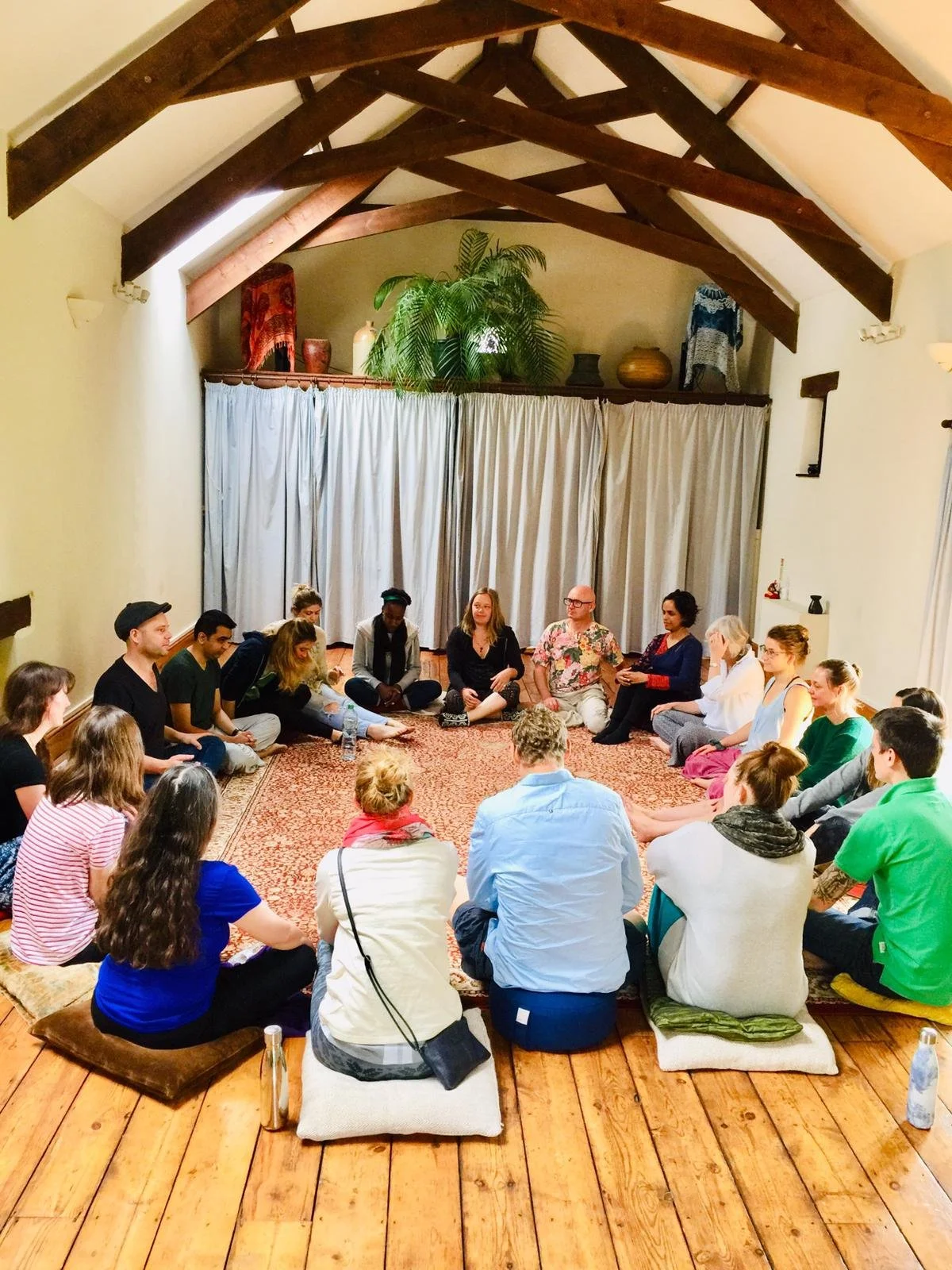
Polyvagal Theory reminds us that the nervous system is constantly scanning for cues of safety or threat. These cues are not just internal, they are relational, environmental, and contextual. The way a space is set up, the language used, the pacing of a session, and the facilitator’s own nervous system state all contribute to how safe a participant feels.
Safety Begins Before The Breath
Supporting safety doesn’t start with the breathing technique itself. It starts with orientation and expectation.
Clear explanations of what a session will involve, what choices are available, and how participants can pause or modify the practice help reduce uncertainty, a major driver of nervous system activation. Even simple framing can support regulation by giving the nervous system a sense of predictability and control.
This is particularly important for people whose nervous systems are more accustomed to sympathetic mobilisation or dorsal vagal shutdown. For these individuals, being asked to “just relax” or “trust the process” can feel unsafe rather than supportive.
Choice Is Regulating
One of the most consistent findings across trauma-informed work is that choice supports regulation.
Offering options, seated or lying down, eyes open or closed, active breathing or resting, gives the nervous system a way to stay engaged without feeling trapped. From a polyvagal lens, this supports the ventral vagal social engagement system, allowing connection without loss of agency.
Importantly, choice needs to be real. Reminding participants that they can change their mind, slow down, or stop at any point reinforces bodily autonomy and reduces the likelihood of fawn or freeze responses emerging in the space.
Pacing Over Intensity
Polyvagal Theory challenges the idea that deeper or more intense experiences are inherently more therapeutic.
For many nervous systems, especially those shaped by trauma or chronic stress, slower pacing and shorter windows of activation are more supportive of long-term regulation. Practices that continually push for catharsis or breakthrough may activate sympathetic or dorsal vagal responses without providing enough support for integration.
This is where grounding and stabilisation become essential skills to support nervous system stability before, during, and after sessions, helping experiences land more sustainably.
The Facilitator’s Nervous System Matters
From a polyvagal perspective, regulation is not only individual, it’s relational.
A facilitator’s tone of voice, pacing, presence, and capacity to stay regulated under intensity all act as cues to the nervous systems in the room. This process, often described as co-regulation requires awareness.
Breathwork professionals who understand their own nervous system patterns are better able to notice when they’re moving into urgency, over-effort, or withdrawal, and to return to steadier ground. This is one reason why nervous system education is such an important part of ethical breathwork training.
Safety Is Ongoing
Creating safer breathwork spaces isn’t about eliminating challenge or discomfort. It’s about supporting the nervous system’s ability to move through experience without becoming overwhelmed or shut down.
Polyvagal Theory offers a way to track this process with curiosity rather than judgement. Instead of asking whether a session was “successful,” facilitators can ask:
Did participants have choice?
Was pacing responsive?
Were signs of overwhelm noticed and met with support?
Was there space for regulation before and after activation?
In this way, safety becomes a living practice rather than a static standard.
How Breathwork Can Support Regulation And Trauma Recovery
Breathwork can be a powerful way of supporting the nervous system, not because it forces relaxation, but because it works directly with the body’s built-in systems for safety, regulation, and connection.
From a polyvagal perspective, the breath is one of the most accessible ways we have to communicate with the autonomic nervous system. Breathing patterns influence heart rate, muscle tone, emotional responses, and how safe or threatened the body feels in any given moment.
Importantly, this doesn’t mean breathwork is about “calming down” all the time. Regulation is about flexibility, the ability to move between activation and rest, connection and solitude, effort and ease.
When approached gently and with choice, breathwork can help the nervous system:
recognise moments of safety
settle after periods of stress
build tolerance for sensation
reconnect with the body at a manageable pace
This is why breathwork is often explored alongside nervous system education, trauma recovery, and emotional regulation practices.
Why Breathing Helps When Words Don’t
Trauma and chronic stress live in the body in breathing patterns, posture, muscle tension, and reflexive responses.
For many people, talking about stress or trauma can feel overwhelming or inaccessible. Breathwork offers another entry point. By working with the rhythm, depth, and pace of the breath, it becomes possible to influence the nervous system without needing to analyse or relive past experiences.
This is especially relevant for people who notice strong stress reactions, shutdown, or overwhelm without always knowing why. Breathwork meets the body where it is.
Gentle Breathwork Practices That Support Regulation
Not all breathing practices are suitable for all nervous systems at all times. When the goal is safety and regulation, simpler practices are often more effective than intense or highly activating techniques.
Some commonly supportive approaches include:
Slow, Rhythmic Breathing
Breathing at a steady, comfortable pace, often slightly slower than usual, can support parasympathetic nervous system activity and help settle stress responses. This kind of breathing is explored further in practices like coherent breathing.
Extended Exhale Breathing
Lengthening the exhale slightly more than the inhale can signal safety to the nervous system and support down-regulation. This approach is often used when someone feels anxious, overstimulated, or restless.
Breath Awareness
Simply noticing the breath without changing it can be a powerful first step, particularly for people who feel disconnected from their bodies. This supports body awareness without adding demand.
Breathing With Touch Or Sensation
Placing a hand on the chest or belly, or feeling the contact between the body and the floor or chair, can support grounding and help orient attention outward as well as inward. Our article on Grounding & Resourcing in Breathwork explores this further.
These practices are often more accessible than deep breathing instructions and allow the nervous system to stay within a window of tolerance.
A Note On Safety And Choice
Breathwork is most supportive when it includes choice.
Being able to pause, change pace, open the eyes, or stop entirely helps the nervous system remain engaged rather than overwhelmed. This is particularly important for people with a history of trauma, chronic stress, or neurodivergence, where internal focus can sometimes increase activation rather than reduce it.
If you’re exploring breathwork on your own, start small. Short practices, gentle pacing, and neutral curiosity go a long way.
If you’re practicing in a group or guided setting, remember that your experience is valid even if it looks different from someone else’s.
Everyday Ways To Support Your Nervous System
Supporting your nervous system doesn’t require specialised tools or long daily practices. In fact, many of the most effective supports are small, ordinary actions that help the body recognise moments of safety throughout the day.
From a polyvagal perspective, regulation is built through repetition, not intensity. These practices don’t aim to eliminate stress, but to help the nervous system move out of survival mode more easily once stress has passed.
Start With What’s Already Available
The nervous system responds to cues of safety that are often external and sensory. Simple actions can gently shift the body out of threat responses without needing to “fix” anything.
You might notice support through:
stepping outside and orienting to your surroundings
feeling your feet on the ground or your back against a chair
noticing temperature, light, or sound in the room
letting your eyes rest on something neutral or pleasant
These small orienting actions are a core part of grounding and resourcing, which we explore in more depth in our article on grounding & resourcing in breathwork.
Use The Breath Gently And Intentionally
Breathing practices can be supportive when they’re simple and responsive to how you’re feeling in the moment.
Rather than aiming for a specific outcome, try noticing:
whether slower breathing feels supportive or irritating
whether breathing through the nose or mouth feels easier
whether placing a hand on the chest or belly adds a sense of containment
If you’re feeling activated or anxious, practices like extended exhale breathing or coherent breathing can help support regulation by signalling safety to the nervous system.
If you’re feeling flat, numb, or disconnected, simply noticing the breath, without trying to deepen or slow it, may be a better place to start. Our Breathwork for Beginners guide explores how to approach breathing practices safely and simply.
Connection Is Regulating
Polyvagal Theory highlights the importance of social engagement in nervous system regulation. Feeling safe with others, even briefly, can have a powerful settling effect on the body.
This doesn’t require deep conversation. It might look like:
a brief, friendly interaction
sitting near others without needing to engage
listening to a familiar, reassuring voice
sharing space in a way that feels low-pressure
For some people, guided practices can help provide this sense of co-regulation. Breathing Space offers free weekly breathwork sessions online, designed to be inclusive, welcoming, and suitable for all levels and nervous systems.
Work With Capacity, Not Against It
One of the most common sources of frustration is trying to regulate when the nervous system doesn’t have the capacity to do so.
If something feels too much, it probably is.
Short practices, frequent breaks, and permission to stop are signs of attunement. This is especially relevant for people living with chronic stress, trauma histories, or neurodivergence, where baseline nervous system load may already be high.
When To Seek Additional Support
Breathwork and nervous system practices can be supportive, but they’re not a replacement for professional mental health support.
If you’re experiencing ongoing overwhelm, intrusive thoughts, dissociation, or distress that feels unmanageable, working with a qualified mental health professional alongside body-based practices can be an important part of care. Breathwork can complement this work, but it doesn’t need to carry the whole load.
Trauma-Informed Breathwork With Breathing Space
If you’d like to explore breathwork in a way that prioritises safety, choice, and nervous system awareness, here are a few gentle ways to begin with Breathing Space:
Free Weekly Breathwork Sessions
Live, guided sessions on Zoom, offered several times a week across different time zones. These are welcoming, inclusive, and suitable for all levels, including beginners and those who prefer slower, more resourcing practices.
https://www.makesomebreathingspace.com/free-breathworkBreathwork Starter Kit (Free Online Course)
A simple introduction to foundational breathwork practices, with a strong focus on awareness, pacing, and choice. Designed to help you explore breathwork safely, in your own time.
https://www.makesomebreathingspace.com/breathwork-starter-kitTargeted Breathwork Techniques
A growing library of breathwork practices organised around everyday needs such as anxiety, sleep, focus, emotional regulation, energy, and chronic stress.
https://www.makesomebreathingspace.com/targeted-breathworkCourses, Events, And Retreats
For those wanting to explore more deeply, Breathing Space offers trauma-informed breathwork courses, in-person and online events, and retreats held with an emphasis on integration and nervous system care.
https://www.makesomebreathingspace.com/breathwork-courses
https://www.makesomebreathingspace.com/events
https://www.makesomebreathingspace.com/breathwork-retreatsTraining And Professional Pathways
If you’re interested in working with others, our Breathwork Coach Programme and 400-hour Breathwork Facilitator Training are rooted in ethical, trauma-informed practice and ongoing self-awareness.
https://www.makesomebreathingspace.com/breathwork-coach
https://www.makesomebreathingspace.com/facilitator-training