
Trauma Responses in Adults
Table Of Contents
- What Is A Trauma Response?
- Trauma, Stress, And Survival: A Simple Biology Explanation
- The Core Four Trauma Responses
- Additional Trauma Responses And Variations
- How Trauma Responses Can Show Up In Conscious Connected Breathwork
- How Breathwork Can Support Trauma Responses
- What Can Help When You Notice A Trauma Response
- Ways Of Experiencing Trauma-Informed Breathwork With Breathing Space
Many adults live with the effects of trauma without ever describing their experiences that way.
Many of us have lived through clearly identifiable traumatic events in our lives, while others have lived for long periods with chronic stress, emotional unpredictability, neglect, or environments where it wasn’t possible to fully relax or be themselves. Whatever the cause, these experiences, and more importantly, our reactions to them, shape how the nervous system responds to the world.
Trauma responses affect far more than memory or mood. They can influence how we think, how we relate to others, how we respond to stress, how we experience our bodies, and how safe we feel in everyday life.
It’s also worth being clear that trauma responses aren’t confined to those with a diagnosis of post-traumatic stress disorder (PTSD). Similar patterns can appear alongside anxiety, depression, chronic pain, burnout, substance use, or long-term health conditions. Neurodivergent people may also experience heightened or different stress responses due to sensory overload, social expectations, or the long-term effects of masking and adaptation.
In this article, we’ll explore the most commonly recognised trauma responses in adults which are often described as fight, flight, freeze, and fawn, as well as additional variations that don’t always fit neatly into these categories. We’ll look at the biology behind these responses, why they were useful from an evolutionary perspective, how they tend to show up in modern life, and how they may emerge in practices such as conscious connected breathwork.
Finally, we’ll explore how breathwork, when approached in a trauma-informed and ethical way, can support regulation, increase capacity, and help restore a sense of choice by working with the nervous system instead of against it.
Understanding trauma responses helps to replace shame with understanding, and creating more compassionate ways of supporting healing, in ourselves, in our clients, and in our communities.
What Is A Trauma Response?
A trauma response is simply the body and nervous system’s automatic reaction to perceived threat.
It isn’t something we consciously decide to do. It happens beneath thought, driven by survival systems that evolved to keep us alive. When the nervous system senses danger, whether that danger is physical, emotional, relational, or psychological, it organises the body to respond in whatever way seems most protective at the time.
These responses are fast and instinctive. They bypass rational thinking entirely. From an evolutionary perspective, that speed is the point and can be the difference between life or death.
Trauma responses can be triggered by a single overwhelming event, by repeated or cumulative traumatic experiences, or by long-term exposure to stress, unpredictability, or lack of safety. Early life experiences, attachment relationships, and the environments we grow up in all play a role in shaping how these responses develop.
One of the reasons trauma responses are often confusing is that they are not the same as the traumatic event itself. They are what happens inside the body and nervous system as a result of that experience, and they can continue long after the event has passed.
This is why someone might notice patterns such as:
feeling on edge even when life appears relatively calm
swinging between emotional reactivity and emotional shutdown
feeling drained by situations others seem to manage easily
experiencing their body or relationships as unsafe, even when nothing “bad” is happening
At some point, the body learned something important, this isn’t safe, and it continues to organise around that information until it receives enough consistent evidence that safety is possible again. Our article on the basic structure and function of the nervous system explores this process in more detail and helps explain why these patterns can be so persistent.
It’s also important to widen the lens beyond what we traditionally label as trauma.
Neurodivergence, chronic illness, ongoing stress, systemic oppression, or repeated experiences of being misunderstood or unsupported can all place the nervous system under sustained pressure. Over time, this can produce responses that look very similar to trauma responses, even in the absence of a single identifiable traumatic event.
This is why trauma responses are best understood as contextual and adaptive, rather than as diagnoses or personality traits. They reflect what a particular nervous system has had to do to survive in a particular set of circumstances.

Trauma, Stress, And Survival
Imagine you’re walking through the forest thousands of years ago and you suddenly encounter a tiger. There’s no time for thinking. Instead, your nervous system takes over, instantly and automatically.
Your heart rate increases. Your breathing changes. Blood is redirected to your muscles. Your senses sharpen. Your body prepares to fight, run, freeze, or do whatever it needs to do to survive.
This response is driven by the autonomic nervous system, the part of the nervous system responsible for keeping us alive without conscious effort.
In the presence of immediate danger, these survival responses are incredibly effective. They increase the chances that you’ll escape, defend yourself, or avoid detection. Once the threat passes, the nervous system ideally returns to a more settled state.
The challenge is that modern threats don’t look like tigers.
Today, the nervous system can be activated by:
ongoing work pressure or financial stress
relational conflict or emotional unpredictability
sensory overload
chronic illness or pain
past traumatic experiences being reactivated
feeling unsafe, unseen, or unsupported over time
The nervous system doesn’t distinguish between a physical threat and a psychological or emotional one.
To the body, stress is stress.
When stress or trauma is ongoing, or when a traumatic event overwhelms the system’s ability to process it, the nervous system may not fully return to baseline. Instead, it stays partially activated, organised around survival rather than ease.
This is what we often mean by traumatic stress.
Over time, this can shape how a person experiences:
attention and concentration
emotional regulation
relationships and trust
their own body and physical sensations
These patterns can persist long after the original threat has passed, which is why trauma responses can feel confusing or frustrating. From the outside, life may look “safe enough”. But inside, the nervous system is still acting as if danger could return at any moment.
This ongoing activation is also why trauma responses are closely linked with conditions such as anxiety disorders, post-traumatic stress, and chronic stress-related health challenges.
It’s also important to recognise that capacity varies. Neurodivergent nervous systems, including those shaped by ADHD or autism, often process sensory and cognitive input differently. This can mean a higher baseline load and less available capacity for stress, making survival responses more likely, even without a single identifiable traumatic event.
These responses evolved to protect us. The issue isn’t that the nervous system learned these strategies, it’s that modern life often doesn’t give the system enough opportunity to complete stress cycles, discharge activation, and return to safety.
This is where approaches that work with the body, rather than asking the mind to override it, become essential. Breathwork, when used appropriately, can support the nervous system in recognising safety again and gradually restoring flexibility.
The Core Four Trauma Responses
When people talk about trauma responses, they’re often referring to four primary survival patterns: fight, flight, freeze, and fawn.
These responses are not personality traits or fixed identities. They’re protective strategies shaped by the nervous system in response to perceived threat. Most adults don’t rely on just one. Instead, they move between several, depending on context, relationships, stress levels, and available capacity.
These responses are driven by the autonomic nervous system. When the body senses danger, they activate automatically, often before there’s time to consciously register what’s happening. In modern life, that danger is more often social, emotional, cognitive, or sensory.
This is why trauma responses can feel confusing or disproportionate. The body is responding to perceived threat, not necessarily to what’s happening in the moment.
The Fight Response
The fight response is commonly associated with anger, but in adult life it usually shows up in quieter, more socially acceptable ways.
Biologically, fight is a mobilisation response. Heart rate increases, muscles tense, and energy is directed toward confronting or pushing back against something that feels threatening. Historically, this helped humans defend themselves or protect territory.
In modern life, the fight response often shows up as:
irritability or a short fuse under stress
defensiveness, especially in conversations that feel charged
a strong need to be right, in control, or taken seriously
frustration when feeling misunderstood or powerless
pushing through exhaustion rather than slowing down
These patterns are frequently labelled as being “reactive” or “difficult”. From a nervous system perspective, they’re often attempts to protect boundaries or regain a sense of agency.
In conscious connected breathwork sessions, the fight response may show up as:
strong physical activation or heat
intense emotional expression, including anger or frustration
a desire to control the breath, pacing, or structure of the session
resistance to softening or slowing down
Neurodivergent people may access fight responses more quickly in overstimulating or invalidating environments, particularly when communication or sensory needs aren’t being met. In these cases, what looks like reactivity is often a nervous system responding to load.
The Flight Response
The flight response is the nervous system’s strategy for getting away from danger.
It mobilises the body for movement. Breathing becomes faster or shallower, the heart rate increases, and attention shifts toward what needs to happen next. Historically, this response helped humans escape predators or leave unsafe situations quickly.
In adult life, flight rarely looks like physically running away. More often, it shows up as constant motion.
Common signs of a flight response include:
anxiety, restlessness, or feeling “wired”
overworking or staying constantly busy
difficulty slowing down, resting, or doing nothing
avoidance of uncomfortable emotions or conversations
feeling safest when productive or in motion
Because these behaviours are often socially rewarded, they can go unnoticed for a long time. Over time, living in a sustained flight response can contribute to burnout, chronic stress, and anxiety disorders.
In conscious connected breathwork, flight responses may appear as:
rapid or forceful breathing
difficulty staying with physical sensations
frequent urges to move, adjust, or stop
racing thoughts or fear of losing control
Slower, rhythmical breathing and clear grounding cues can be especially supportive here, helping the nervous system experience slowing down as safe rather than threatening.
The Freeze Response
The freeze response occurs when the nervous system perceives that fighting or fleeing isn’t possible.
Instead of mobilising energy, the body shifts toward immobilisation. Heart rate may slow, muscles can feel heavy or numb, and awareness may narrow or dissociate. Historically, this response increased survival by conserving energy or avoiding detection.
In adult life, freeze is often misunderstood and mislabelled.
Freeze responses may show up as:
feeling stuck or unable to take action
numbness or emotional shutdown
difficulty making decisions or initiating tasks
dissociation or feeling “not quite here”
chronic fatigue or low energy
Because freeze dampens emotional expression, it often goes unnoticed, even by the person experiencing it. Many adults live in a state of functional freeze, appearing capable on the outside while feeling disconnected internally.
In conscious connected breathwork sessions, freeze may show up as:
shallow or minimal breathing
difficulty engaging with the practice
spacing out or losing track of time
emotional flatness or delayed emotional response
The Fawn Response
The fawn response is a survival strategy centred around appeasement and maintaining connection.
Rather than fighting, fleeing, or freezing, the nervous system attempts to stay safe by pleasing others and minimising conflict. This response often develops in environments where expressing needs, disagreement, or emotions felt unsafe.
In adult life, fawn responses may look like:
people-pleasing or difficulty saying no
prioritising others’ needs over one’s own
fear of conflict or abandonment
blurred or inconsistent boundaries
feeling responsible for other people’s emotions
Because these behaviours are often praised as kindness or empathy, they can be especially hard to recognise. Over time, fawn responses can lead to exhaustion, resentment, and a loss of connection with one’s own needs.
In breathwork spaces, the fawn response may show up as:
trying to “do the practice right”
ignoring discomfort to please the facilitator
reluctance to speak up or ask for adjustments
staying engaged even when overwhelmed
This is why trauma-informed breathwork emphasises consent, choice, and repeated reminders that pausing, resting, or opting out are welcome.
Additional Trauma Responses And Variations
While the fight, flight, freeze, and fawn responses are a useful framework, they don’t capture the full range of ways trauma and chronic stress can shape the nervous system.
Many adults don’t recognise themselves fully in just one response. Trauma responses are fluid, context-dependent, and often layered. Over time, the nervous system may develop variations or combinations that are better suited to a person’s environment, relationships, or responsibilities.
Some of the most common additional or blended trauma responses include the following:
Functional Freeze
Functional freeze describes a state where a person appears outwardly capable, but internally feels stuck, flat, or disconnected.
People in functional freeze may:
go to work, parent, or socialise as expected
feel chronically exhausted despite “doing fine”
struggle with motivation or pleasure
feel disconnected from their body or emotions
experience a sense of life being on autopilot
This response often develops when full shutdown isn’t possible, but mobilising energy doesn’t feel safe either. It’s especially common in adults with long-term caregiving roles, chronic stress, or early responsibility.
Collapse Or Shutdown
Collapse is a deeper form of immobilisation than freeze.
It may show up as:
extreme fatigue or heaviness in the body
withdrawal from social contact
low mood or hopelessness
difficulty speaking, thinking, or initiating movement
feeling overwhelmed by even small tasks
Collapse is sometimes confused with depression, and while the experiences can overlap, collapse is rooted in nervous system shutdown rather than mood alone. It often appears after prolonged stress, burnout, or repeated overwhelm without adequate recovery.
Dissociation And Detachment
Dissociation is a protective response that creates distance from overwhelming sensations, emotions, or experiences.
This can include:
feeling detached from the body
feeling unreal or “not quite here”
losing track of time
difficulty remembering parts of conversations or experiences
feeling emotionally numb in situations that would normally evoke feeling
Dissociation exists on a spectrum. Many adults experience mild, functional dissociation without realising it, particularly during stress, conflict, or sensory overload.
Oscillating Or Mixed Responses
Some people move rapidly between different trauma responses.
For example:
alternating between overworking and complete shutdown
cycling between people-pleasing and sudden anger
periods of high productivity followed by exhaustion
feeling calm one moment and overwhelmed the next
This is the nervous system adapting moment by moment, based on perceived safety and capacity.
Trauma Responses And Neurodivergence
Neurodivergent nervous systems often operate with a higher baseline of sensory or cognitive load. Over time, this can lead to trauma-like stress responses even in the absence of a single traumatic event.
Common overlaps include:
shutdown after social or sensory overload
heightened fight or flight responses in overwhelming environments
dissociation as a coping strategy
difficulty returning to baseline after stress
This is one reason it’s important not to reduce trauma responses to diagnoses or labels. Context matters. Capacity matters.
Understanding these variations helps move the conversation away from “Which trauma response am I?” and toward a more useful question:
“What does my nervous system do when it’s under pressure, and what helps it feel safer?”
How Trauma Responses Can Show Up In Conscious Connected Breathwork
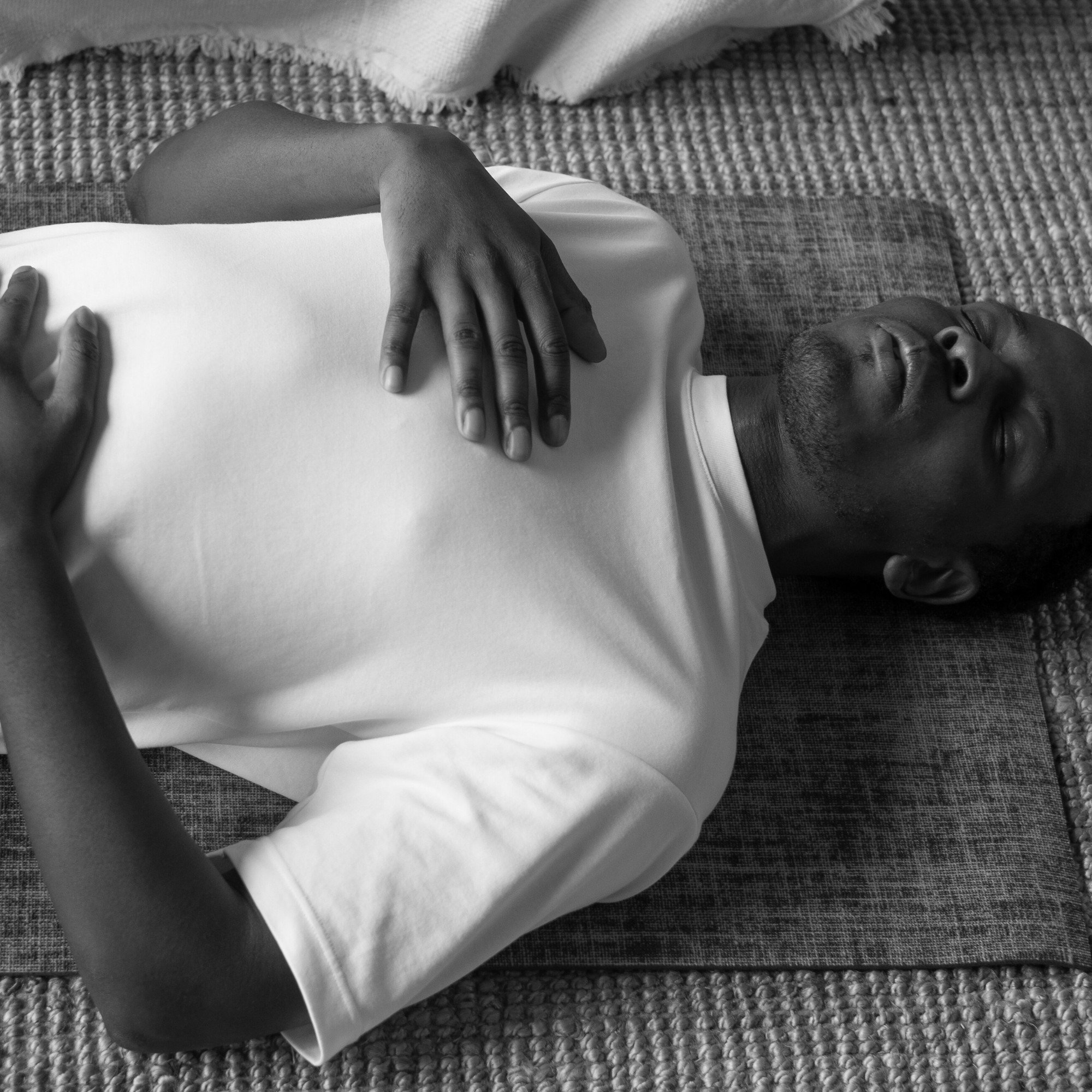
Conscious connected breathwork can be a powerful practice precisely because it works directly with the nervous system rather than around it. By altering breathing patterns, reducing distraction, and bringing attention into the body, breathwork can lower habitual defences and make underlying survival responses more visible.
This doesn’t mean breathwork causes trauma responses.
More often, it reveals patterns that are already there.
In everyday life, many trauma responses stay partially hidden. They’re managed through busyness, distraction, social roles, or coping strategies that keep things moving along. In a conscious connected breathwork session, those buffers may soften. The nervous system has more space, and with that space, familiar survival strategies can emerge more clearly.
For some people, this is the first time they notice how their body responds under stress.
In breathwork sessions, trauma responses may show up in a variety of ways, including:
changes in breathing pace or depth
strong physical sensations such as heat, tension, or heaviness
emotional responses that feel sudden or unfamiliar
urges to move, stop, control, or disengage
difficulty staying present or connected
They’re often signs that the nervous system is responding to reduced control and increased interoception.
This is why understanding trauma responses is so important when working with practices like conscious connected breathwork. Without this context, participants may assume something is “wrong”, or facilitators may misinterpret protective responses as resistance or lack of engagement.
Different trauma responses tend to show up in different ways:
Fight responses may appear as strong activation, emotional intensity, or a desire to manage the session.
Flight responses may show up as rapid breathing, restlessness, or difficulty staying with sensations.
Freeze responses can look like shallow breathing, numbness, dissociation, or feeling distant from the experience.
Fawn responses may appear as overriding discomfort, trying to “do it right”, or reluctance to speak up.
For facilitators, this is where trauma-informed principles become essential. Clear framing, consent-based language, and repeated reminders of choice help support safety. Resources such as Grounding & Resourcing in Breathwork offer practical ways to support regulation before, during, and after sessions.
For participants, understanding that these responses are nervous system patterns rather than personal failures can be deeply relieving. It reframes intense or confusing experiences as meaningful information rather than something to push through or avoid.
It’s also worth noting that not every trauma response needs to be explored through breathwork. Some people benefit from gentler, more stabilising practices first. Articles like Is Breathwork Safe? explore when breathwork may need to be adapted or paused, and why working within one’s capacity is part of ethical practice.
What Can Help When You Notice A Trauma Response
Breathwork doesn’t remove trauma responses, and it doesn’t override the nervous system. What it can do, when practiced thoughtfully, is support the conditions in which the nervous system has more choice.
Trauma responses tend to narrow options. The body learns to default to what once worked, mobilising, shutting down, appeasing, or escaping, often without conscious awareness. Breathwork works at a different level. By engaging the breath, it influences the autonomic nervous system directly, supporting regulation rather than control.
Over time, this can increase capacity.
Rather than asking someone to “calm down” or think differently, breathwork offers the nervous system a felt experience of something else: slower rhythms, clearer boundaries, moments of safety, or the ability to stay present without bracing.
In practice, breathwork may support trauma responses by:
helping the nervous system recognise when it is no longer under immediate threat
increasing tolerance for bodily sensation without overwhelm
supporting transitions between activation and rest
reducing the need for habitual coping strategies
making emotional and physical responses more noticeable and easier to work with
This doesn’t happen through intensity or catharsis alone. In fact, for many people, especially those with trauma histories, gentler, more consistent practices are often more effective than dramatic experiences.
For someone who tends toward fight or flight responses, breathwork can help soften constant mobilisation and make slowing down feel safer. For those who lean toward freeze or collapse, it can support gradual re-engagement with sensation and energy without pressure to “wake up” or push through. For people with strong fawn patterns, breathwork can offer a rare opportunity to notice internal cues without immediately orienting toward others.
It’s also important to acknowledge that breathwork is not generally a standalone treatment for trauma. Many people benefit from combining breathwork with other forms of support, including therapy, body-based practices, or broader mental health services.
Practices that prioritise pacing, consent, and choice are far more likely to build regulation than those that aim for release at any cost. If you’re interested in how this looks in practice, trauma-informed breathwork approaches explore how to work with the nervous system without overwhelming it.
How Breathwork Can Support Trauma Responses
Noticing a trauma response is often the most significant step. Many people live inside these patterns for years without realising what’s happening. Simply recognising “something in me is responding to threat” can create a little more space.
What helps in these moments isn’t forcing yourself to calm down or trying to get rid of the response. Trauma responses don’t resolve through logic. They soften when the nervous system receives signals of safety, support, and time.
Here are some practical ways people often support themselves when they notice they’re in a trauma response.
Pause the story, notice the state
Instead of analysing why you feel a certain way, it can be more helpful to notice how your system is responding. Are you activated, shut down, restless, or overly focused on others? Naming the state, even quietly, can reduce self-blame and interrupt automatic reactions.
Reduce input before adding techniques
When a trauma response is active, adding more information, stimulation, or effort can increase overwhelm. Turning down noise, stepping outside, closing a few tabs, or creating a quieter physical environment often helps more than trying to “do” something.
Orient to the present moment
Gently noticing where you are, the room, the light, the temperature, the weight of your body, can help the nervous system distinguish between past threat and present safety. This doesn’t require deep focus or meditation, just brief, simple noticing. If you are struggling, try this body scan guided audio.
Let the body move in small, contained ways
Trauma responses often involve either too much activation or too little. Small movements, stretching, changing position, walking slowly, pressing feet into the floor, can help regulate without pushing the system into intensity.
Use the breath as an anchor, not a tool
Rather than changing your breathing dramatically, it can help to simply notice it. Feeling the breath in the chest or belly, or letting the exhale lengthen naturally, can support regulation without turning the breath into another task.
Give yourself permission to respond differently later
Trauma responses are about immediacy. Reminding yourself that you don’t need to resolve everything right now, that you can come back to decisions, conversations, or emotions later, often reduces internal pressure.
It’s also worth remembering that trauma responses don’t disappear once they’re understood. They tend to soften gradually, as the nervous system experiences more moments of safety, predictability, and choice. This happens through many small interactions over time, not through a single breakthrough.
Breathwork can be one of those supports, especially when approached gently and consistently. But so can rest, boundaries, supportive relationships, and environments that reduce unnecessary stress.
Ways Of Experiencing Trauma-Informed Breathwork With Breathing Space
If you’re curious to explore this further, Breathing Space offers a range of resources that many people find supportive alongside this kind of understanding:
Our What Is Breathwork? guide offers an overview of different breathwork approaches and how they’re used in everyday life:
https://www.makesomebreathingspace.com/conscious-breathThe Basic Primer on the Nervous System explores how stress, regulation, and safety work in the body in clear, accessible language:
https://www.makesomebreathingspace.com/blog/nervous-systemIf grounding and stabilisation feel important, Grounding & Resourcing in Breathwork looks at practical ways to support safety before going deeper:
https://www.makesomebreathingspace.com/blog/grounding-resourcingOur Free Weekly Breathwork Sessions, offered across multiple time zones, are designed to be welcoming, inclusive, and accessible for all levels:
https://www.makesomebreathingspace.com/free-breathworkFor those who prefer self-paced exploration, the Breathwork Starter Kit offers a gentle introduction without pressure or intensity:
https://www.makesomebreathingspace.com/breathwork-starter-kit
Working With Others? Or Considering It?
If you’re working with others, or considering doing so, learning about trauma responses and trauma-informed practice can also inform how you hold space, communicate, and pace practices. Our Breathwork Facilitator Training and Breathwork Coach Training explore these themes in more depth, always with an emphasis on ethics, consent, and nervous system awareness:
https://www.makesomebreathingspace.com/facilitator-training
https://www.makesomebreathingspace.com/breathwork-coach