
What Is a Breathwork Coach?
Quick Links
- What Does a Breathwork Coach Do?
- Breathwork Coach vs Breathwork Facilitator
- How Does Breathwork Coaching Work?
- What Can Breathwork Coaching Help With?
- Is Breathwork Coaching Safe?
- How Do You Become a Breathwork Coach?
- Do You Need a Breathwork Coach Certification?
- Is Breathwork Coaching Right for You?
Breathing is something we do every moment of our lives, and yet most of us move through the day without ever being taught how much influence the breath has on our stress levels, emotions, focus, or sense of connection to ourselves.
In recent years, breathwork has become more visible in the wellness world. People are turning to breathing techniques to support anxiety, burnout, sleep, emotional regulation, and nervous system health. Alongside this growth, a new role has emerged more clearly: the breathwork coach.
But what is a breathwork coach, really?
A breathwork coach is not someone who diagnoses, fixes, or analyses people. They are not replacing therapy or medical care. Instead, breathwork coaching sits in a grounded, practical space, supporting people to work with their breath consciously, safely, and intentionally, within a clear scope of practice.
Breathwork coaching is about education, guidance, and presence. It’s about helping people understand how their breathing patterns affect their body and nervous system, and supporting them to build a relationship with their breath that feels empowering rather than overwhelming. Sessions may be one-to-one or in small groups, and they are shaped around choice, pacing, and integration. Or at least they should be!
As interest in breathwork grows, so do the questions. What does a breathwork coach actually do in sessions? How is breathwork coaching different from facilitation or therapy? Is breathwork safe? And if you feel drawn to this work, what kind of training or certification is genuinely supportive and ethical?
This article explores those questions in depth. Whether you’re simply curious about breathwork coaching, considering working with a breathwork coach, or exploring the idea of becoming one yourself, this guide is here to help!
What Does a Breathwork Coach Do?
At its core, breathwork coaching is about supporting people to work with their breath in a conscious, intentional way, in sessions that are structured, ethical, and responsive to the individual.
A breathwork coach doesn’t “fix” people or tell them what their experience means. Instead, they guide, educate, and hold space so clients can explore their own breathing patterns and nervous system responses with curiosity and care.
In practice, a breathwork coach may:
Guide breathing techniques for stress reduction, focus, sleep, emotional regulation, or energy, choosing practices that match the client’s needs and capacity.
Explain how breath affects the body and nervous system, helping clients understand what’s happening physiologically rather than leaving them guessing or overwhelmed.
Create a safe, supportive space where feelings, sensations, or thoughts can arise without judgement, pressure, or interpretation.
Structure breathwork sessions with clear beginnings, middles, and endings, so clients feel held, oriented, and supported throughout the experience.
Support integration after sessions, helping clients reflect on what they noticed and how breathwork can be woven into daily life in a practical way.
Adapt sessions in real time, responding to signs of dysregulation, fatigue, or overwhelm by slowing down, resourcing, or changing approach.
Breathwork coaches work with individuals one-to-one and often with small groups. Some integrate breathwork coaching into existing roles such as yoga teaching, therapy, coaching, or healthcare, while others build dedicated breathwork coaching practices. In all cases, the focus should remain the same: supporting people to develop a healthier, more conscious relationship with their breath.
Importantly, ethical breathwork coaching stays within a clear scope of practice. A breathwork coach does not diagnose mental health conditions, process trauma therapeutically, or replace medical or psychological care. When deeper support is needed, a skilled coach knows when to pause, refer on, and prioritise safety.
This combination of practical technique, nervous system awareness, and ethical boundaries is what distinguishes breathwork coaching from simply “teaching breathing exercises” and why proper training really matters.
Breathwork Coach vs Breathwork Facilitator
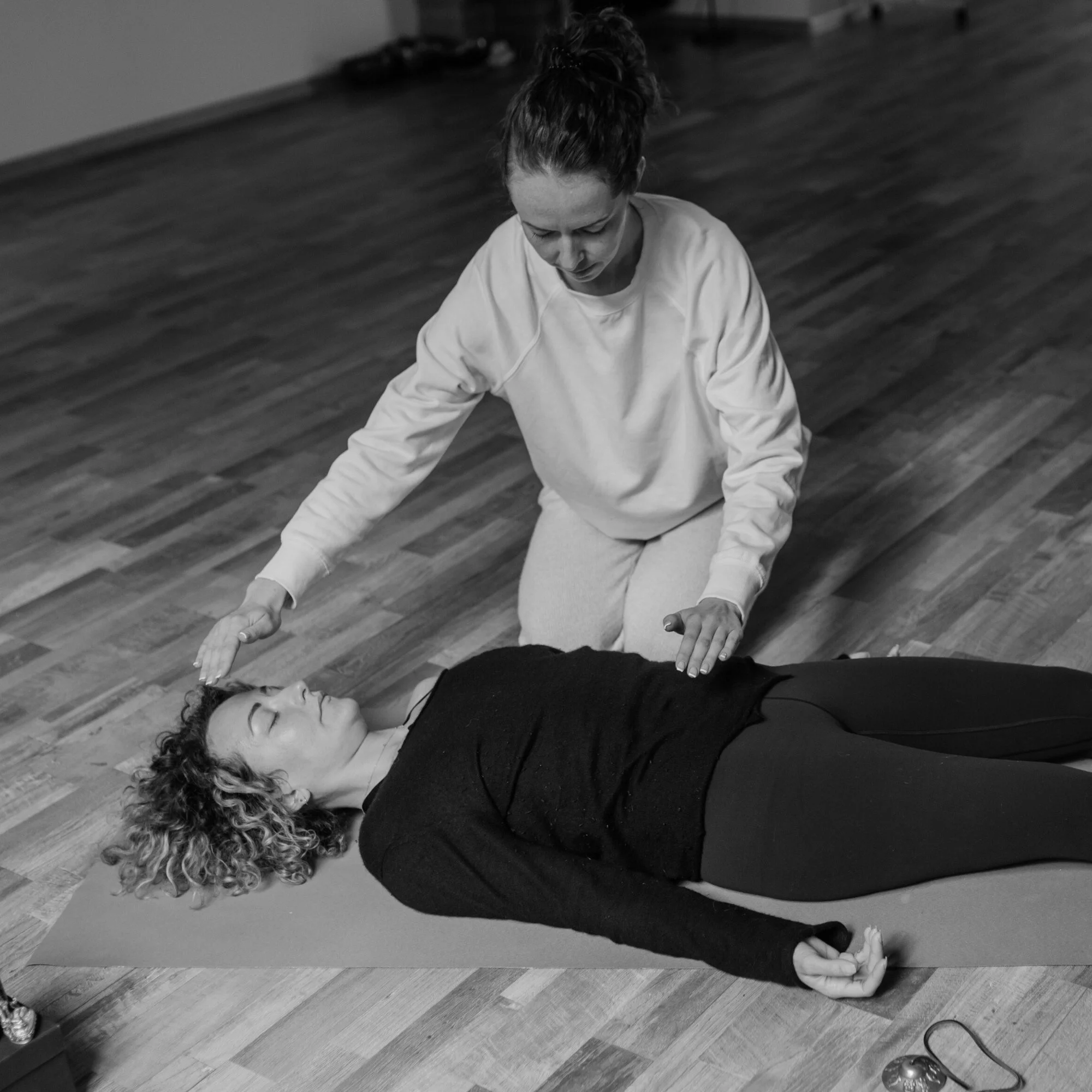
The terms breathwork coach and breathwork facilitator are often used interchangeably, which can make it difficult to understand what someone is actually trained to do. While there is overlap, these roles are not always the same, and the difference matters for both safety and clarity. Below is how we define both at Breathing Space.
A breathwork coach typically works in a more personalised, relational way. Coaching sessions are often one-to-one or in small groups and focus on helping people build a conscious relationship with their breath over time. The work is grounded in education, nervous system awareness, and practical breathing techniques that support everyday life, such as managing stress, improving sleep, or developing emotional regulation skills.
Breathwork coaching is usually ongoing rather than one-off. A coach may work with a client over multiple sessions, adapting practices as their needs change and supporting integration between sessions. Because of this, coaching requires strong skills in listening, pacing, consent, and ethical boundaries.
A breathwork facilitator, on the other hand, most often leads anything from one on one to small or large group breathwork sessions or workshops. Facilitation focuses on guiding a shared experience for a group, holding group dynamics, and maintaining safety across a range of nervous system responses at the same time. Facilitators may work with larger groups, longer sessions, or more intensive breathwork practices, depending on their training.
Many facilitators are also trained to work one-to-one, and many coaches eventually choose to train as facilitators. The difference is not about hierarchy, but about context, responsibility, and depth of training.
Because group breathwork can amplify emotional and physiological responses, facilitation generally requires more advanced training, deeper trauma awareness, and extensive practicum experience. For this reason, many people begin with breathwork coaching as a professional foundation before moving into facilitator training later.
This is why clear training pathways matter. A well-designed breathwork coach certification teaches not only techniques, but also scope of practice, helping you understand what kind of work you are trained to offer, and what requires further education or referral.
If you’re exploring this field, it’s worth asking yourself:
Do I want to work primarily one-to-one or with small groups?
Am I interested in practical, ongoing support or intensive group experiences?
What level of responsibility do I feel ready to hold right now?
There’s no “better” or more powerful role, only what fits your capacity, values, and stage of learning. Many skilled breathwork professionals move fluidly between coaching and facilitation over time, supported by ongoing training and supervision. But please remember that intensity does not equal transformation!
At Breathing Space, we teach breathwork coaching as a collaborative, relational practice, not something that’s done to someone, but something that unfolds with them.
How Does Breathwork Coaching Work?
At its simplest level, breathwork coaching works by using conscious breathing techniques to influence the nervous system. The breath is one of the few systems in the body that we can both regulate consciously and that also operates automatically. This makes it a powerful bridge between the body, the mind, and emotional experience.
By changing the rhythm, depth, or quality of the breath, we can support shifts in stress levels, energy, focus, and emotional state. Slower breathing can help settle the nervous system. More rhythmic breathing can build awareness and vitality. Gentle changes in breath can bring people into closer contact with their internal experience.
But how breathwork coaching is guided matters just as much as which techniques are used.
A collaborative approach, not a corrective one
In the Breathing Space approach, we start from a simple but essential belief:
people already carry innate wisdom about their own bodies and nervous systems.
A breathwork coach is not there to override that wisdom or tell someone what they should be feeling. Instead, the coach offers structure, information, and support while respecting that each person is the expert on their own lived experience.
This means breathwork coaching is invitational rather than prescriptive. Clients are encouraged to notice their own sensations, emotions, and responses, and to make choices that feel right for them in the moment. Leadership is shared: the coach guides the session, and the client leads their own internal process.
What a typical breathwork coaching session looks like
While every session is different, breathwork coaching usually follows a clear, supportive structure:
Opening and orientation
The session begins with consent, intention-setting, and a brief check-in. This helps establish safety, clarity, and shared understanding. This may include somatic practices as well to get ready for the breathwork.Guided breathwork practice
The coach introduces breathing techniques suited to the client’s goals and capacity, offering clear cues and plenty of choice. The pace remains responsive rather than fixed.Awareness and adaptation
Throughout the session, the coach pays attention to verbal and non-verbal cues, adjusting the practice if signs of discomfort, fatigue, or dysregulation arise.Integration and closing
Time is given to slow down, ground, and reflect. Rather than analysing the experience, the focus is on helping the client notice what felt supportive and how breathwork might fit into daily life.
This structure allows breathwork to be both effective and contained, supporting insight and regulation without overwhelming the nervous system.
The role of science, without losing the human element
Breathwork coaching is informed by science, particularly our understanding of breathing physiology and the nervous system. Knowing how breath affects stress responses, heart rate variability, and emotional regulation helps coaches make informed, responsible choices.
At the same time, breathwork coaching is not a mechanical process. Two people can practise the same breathing technique and have very different experiences. This is why we teach coaches to stay curious, flexible, and relational, responding to the person in front of them, not forcing a technique to “work”.
Ultimately, breathwork coaching works best when it honours both knowledge and lived experience. Technique and intuition. Guidance and self-leadership. Structure and choice.
This balance is what allows breathwork to become a sustainable, empowering practice.
What Can Breathwork Coaching Help With?
Breathwork coaching is often sought out because something feels off. People come to breathwork when they want practical support for navigating everyday life with more steadiness, awareness, and choice.
Within a clear coaching scope, breathwork can be a powerful support for:
Stress and nervous system overload
Modern life places constant demands on the nervous system leaving a lot of us in a state of high alert. Breathwork coaching can help people recognise when they are stuck in chronic stress and learn breathing practices that support down-regulation, rest, and recovery. Over time, this can build greater resilience and a felt sense of safety in the body.
Anxiety and overwhelm
Many people experience anxiety as racing thoughts, tightness in the chest, shallow breathing, or a feeling of being “on edge.” Breathwork coaching doesn’t aim to eliminate anxiety, but to help people relate to it differently, using breath to create more space, choice, and grounding when anxiety arises.
Sleep and rest
Breathing patterns play a significant role in how easily we fall asleep and how deeply we rest. Breathwork coaching can support people in developing simple evening or bedtime practices that signal safety to the nervous system and help the body shift out of alertness.
Focus, clarity, and energy
Not all breathwork is calming. Certain breathing techniques can support alertness, focus, and mental clarity, particularly useful for people who feel foggy, scattered, or depleted. A coach helps tailor practices so they support energy without tipping into agitation.
Emotional regulation
Breathwork coaching can help people become more aware of how emotions show up in the body, and how breath can support regulation when feelings are strong. This is not about “getting rid” of emotions, but about building capacity to stay present with them in a way that feels manageable.
Building a daily breathwork practice
For many people, the biggest benefit of breathwork coaching is learning how to use breath in real life. A coach supports clients to integrate breathing techniques into daily routines, before meetings, during stressful moments, after work, or as part of a grounding ritual, rather than keeping breathwork as something that only happens in sessions.
What breathwork coaching does not do
It’s just as important to be clear about what breathwork coaching is not intended to replace.
Breathwork coaching does not diagnose or treat mental health conditions, process trauma therapeutically, or substitute for medical or psychological care. When deeper or more complex support is needed, an ethical breathwork coach recognises this and supports referral to appropriate professionals.
This clarity around scope is not a limitation, it’s what makes breathwork coaching safe, respectful, and sustainable for both clients and coaches.
When held well, breathwork coaching offers people something simple but profound: a way to come back into relationship with their breath, their body, and their inner resources, without force, pressure, or promises of being “fixed.”
Is Breathwork Coaching Safe?
Breathwork coaching can be safe and supportive when it’s guided responsibly, ethically, and within a clear scope of practice.
The breath directly influences the nervous system, which means breathwork can bring up physical sensations, emotions, or shifts in state. This is not inherently unsafe, but it does mean that how breathwork is taught and guided matters.
A trauma-sensitive breathwork coach prioritises:
choice and consent rather than pressure
pacing that responds to the individual
clear session structure and grounding
awareness of signs of dysregulation
ethical boundaries and referral when needed
Safety in breathwork is not about avoiding all intensity. It’s about knowing when to slow down, when to pause, and when to offer support. This is why proper training and certification are so important — not just learning breathing techniques, but learning how to work with real people, real nervous systems, and real lives.
If you’d like to explore this topic in more depth, including contraindications and common safety questions, you can read our full article here:
Is Breathwork Safe?
https://www.makesomebreathingspace.com/blog/is-breathwork-safe
How Do You Become a Breathwork Coach?
The field of breathwork is broad, and trainings can vary widely in depth, focus, ethics, and approach. Because of this, one of the most important steps in becoming a breathwork coach is learning how to choose a training that genuinely aligns with your values, capacity, and intentions.
At a minimum, we recommend seeking out a training that includes trauma-sensitive practices, clear ethical guidelines, and a defined scope of practice. Breathwork works directly with the nervous system, and responsible training should teach you not only how to guide breathing techniques, but how to do so safely, with choice, consent, and care.
A grounded pathway into breathwork coaching
Most people begin their journey as a breathwork coach through a combination of:
Personal breathwork practice
Developing a relationship with your own breath helps you understand how different techniques affect your nervous system, emotions, and energy. This embodied experience becomes the foundation of ethical coaching.Professional training and certification
A breathwork coach training should teach foundational breathing techniques, nervous system basics, coaching skills, and ethical boundaries — alongside opportunities to practise and receive feedback.Practice and integration
Learning to guide breathwork with others takes time. Structured practice sessions, reflection, and mentoring help build confidence and clarity before working independently with clients.Ongoing learning and self-awareness
Breathwork coaching is not a fixed skill set. Many coaches continue learning through supervision, further training, or advanced facilitator pathways as their work evolves.
Choosing the right breathwork coach training
Because not all breathwork trainings are alike, it’s worth taking the time to explore what feels right for you. Some trainings are highly technique-focused, others lean more spiritual or experiential, and some prioritise ethics, trauma sensitivity, and professional structure.
Questions you might consider include:
Does this training emphasise safety, consent, and nervous system awareness?
Is there a clear scope of practice?
Are there opportunities to practise, reflect, and receive support?
Does the training fit realistically into my life?
Our own 50-Hour Breathwork Coach Certification is designed as a flexible, accessible foundation for this work. The programme is fully online, can be started at any time, and is structured to support learning at a sustainable pace. It offers trauma-sensitive, science-informed training with live support and clear practice requirements.
Importantly, this certification also forms the foundational modules of our 400-Hour Breathwork Facilitator Training. For those who wish to continue into deeper facilitation work later, the learning you complete here is recognised and carried forward, allowing your training journey to build step by step, rather than starting over.
Whether you train with us or elsewhere, what matters most is choosing a pathway that supports your growth and the wellbeing of the people you hope to work with. Breathwork coaching is as much about how you show up as it is about what you teach, and the right training will help you develop both.
Do You Need a Breathwork Coach Certification?
There is no single global licensing body for breathwork coaching, which means that technically, someone can guide breathwork without formal certification. However, when you’re working with something as direct and influential as the breath, training and certification matter, not for status, but for safety, clarity, and integrity.
A well-designed breathwork coach certification provides more than a list of breathing techniques. It teaches you how to work responsibly with real people and real nervous systems. This includes understanding scope of practice, recognising signs of dysregulation, offering choice and consent, and knowing when to pause or refer someone for additional support.
Certification also protects both the coach and the client. For the coach, it offers structure, confidence, and professional boundaries. For the client, it signals that the person guiding them has taken the time to learn ethical practice, nervous system awareness, and safe session design, rather than improvising or relying solely on personal experience.
What to look for in a breathwork coach certification
Not all certifications offer the same depth or support. When exploring training options, it can be helpful to look for a programme that includes:
Trauma-sensitive practices, woven throughout the curriculum rather than treated as an add-on
Science-informed education, including basic breathing physiology and nervous system awareness
Clear ethical guidelines and scope of practice
Practical experience, with opportunities to guide sessions and reflect on your learning
Ongoing support, such as mentoring, live sessions, or community connection
Online training can be a strong option when it’s thoughtfully designed. The key is not whether a programme is online or in person, but whether it provides structure, accountability, and real opportunities to practise what you’re learning.
Our 50-Hour Breathwork Coach Certification is built with these principles in mind. It’s an online programme that can be started at any time, with lifetime access to materials and live weekly support. The training is trauma-sensitive, science-informed, and grounded in ethical coaching practice, offering a clear foundation for guiding breathwork safely and confidently.
For those who wish to continue their education, this certification also forms the foundational stage of our 400-Hour Breathwork Facilitator Training, allowing learning to build progressively rather than in isolated pieces.
Ultimately, certification isn’t about collecting credentials, it’s about choosing a level of responsibility. Breathwork coaching invites people into intimate territory, and the training you choose shapes not only what you teach, but how you hold others in that process.
Is Breathwork Coaching Right for You?
Breathwork coaching isn’t about having all the answers, being endlessly calm, or presenting yourself as a healer. It’s about being willing to listen, to learn, and to meet people where they are, including yourself.
Breathwork coaching may be a good fit if you:
feel genuinely curious about how breath affects the body, emotions, and nervous system
value safety, consent, and ethical practice over dramatic experiences or quick results
are comfortable holding space without needing to fix or analyse
want to support others in practical, grounded ways that integrate into real life
are open to ongoing learning, reflection, and personal growth
Many people who train as breathwork coaches come from other fields, yoga, coaching, therapy, bodywork, healthcare, education, while others arrive simply because breathwork has supported them personally and they feel called to share it. There’s no single “type” of breathwork coach, and no requirement to have everything figured out before you begin.
At the same time, breathwork coaching may not be the right path if you’re looking for fast financial returns, rigid formulas, or a role where you’re positioned as the authority over someone else’s inner experience. This work asks for presence, patience, and humility, and for a willingness to stay within scope and refer on when something is beyond your role.
If you’re unsure, that uncertainty doesn’t mean “no.” Often it simply means you’re taking the decision seriously. Exploring further through reading, personal practice, or conversation can help you feel into what’s right for you.
If you’d like a clear, structured, trauma-sensitive introduction to breathwork coaching, our 50-Hour Breathwork Coach Certification offers a supportive starting point. And if you’d prefer to talk it through first, you’re warmly invited to book a no-pressure discovery call, simply a space to ask questions and explore whether this path, and this training, feels aligned.
If you are considering Breathing Space, why not check out our free online Open Information Sessions? Or try a free online breathwork session run by our incredible students, teachers and graduates.