
How Breathwork Coaching Fits Into Existing Professions
Quick Links
- What Breathwork Coaching Is (and Isn’t) in Professional Contexts
- Breathwork Coaching as Continuing Professional Development (CPD)
- Therapists & Counsellors
- Coaches (Life, Leadership, Wellbeing)
- Yoga Teachers & Movement Professionals
- Bodyworkers & Somatic Practitioners
- Healthcare, Education & Caring Roles
- Career Transitioners & Portfolio Workers
- How We Teach Breathwork Coaching at Breathing Space
- An Invitation
If you already work with people, as a therapist, coach, healthcare professional, teacher, bodyworker, or in another caring role, you may feel both drawn to breathwork and cautious about how it fits in.
When you care about scope of practice, ethics, and doing no harm, adding something new to your work isn’t a small decision. Many people worry about overstepping, blurring boundaries, or being asked to become someone they’re not. Others simply wonder whether breathwork can realistically fit alongside the roles and responsibilities they already carry.
Breathwork coaching, when taught and practised well, can sit gently alongside what you already do, supporting regulation, awareness, and connection in ways that complement existing skills rather than replacing them.
At Breathing Space, we teach breathwork coaching as a trauma-sensitive, ethical practice that respects both the client and the professional. Breathwork coaches are trained to work one-to-one, in small groups, or online, using accessible breathing techniques and clear session structure.
This article explores how breathwork coaching can integrate into a wide range of existing professions, from therapy and healthcare to yoga, education, and body-based work.
What Breathwork Coaching Is (and Isn’t) in Professional Contexts
When breathwork is introduced into professional settings, clarity about the practice is important. Without that clarity, people can feel unsure where the edges are, or worry about accidentally stepping outside the scope of their role.
Breathwork coaching, as we teach it at Breathing Space, is a non-clinical, trauma-sensitive practice that focuses on supporting people to build awareness and regulation through their breath. It is educational, experiential, and relational, not diagnostic or therapeutic.
What breathwork coaching is
In professional contexts, breathwork coaching can offer:
Nervous system support through accessible breathing techniques that help people settle, focus, or gently re-energise
Increased body awareness, helping clients notice how stress, emotion, or fatigue shows up in their breathing patterns
Practical self-regulation tools that clients can use between sessions and in everyday life
A structured, consent-based space where breath is explored with choice, pacing, and clear beginnings and endings
Breathwork coaches trained with Breathing Space learn to work one-to-one, in small groups, or online, adapting sessions to suit different contexts and capacities. The emphasis is always on meeting the person in front of you, rather than applying a one-size-fits-all method.
What breathwork coaching isn’t
Just as important is what breathwork coaching is not intended to be.
Breathwork coaching does not:
diagnose or treat physical or mental health conditions
replace therapy, counselling, or medical care
analyse or interpret a client’s emotional material
aim to provoke catharsis or emotional release
include high-ventilation breathwork practices such as Conscious Connected Breathwork
We created the Breathwork Coaching programme this way to keep breathwork coaching safe, ethical, and widely applicable across professions. By staying within scope, breathwork coaching can complement existing work without blurring boundaries or increasing risk for you or your clients.
For many professionals, this is exactly what makes breathwork feel workable and powerful! It offers something embodied and supportive, without requiring you to step outside your training or take on responsibilities that don’t belong to you.
In the sections that follow, we’ll explore how this looks in practice across some different fields, and the kinds of realistic ways breathwork coaching can sit alongside the work you already do. This is by no means an exhaustive list. If you want to chat about how Breathwork might fit into your profession, please get in touch at breathe@makesomebreathingspace.com.
Breathwork Coaching as Continuing Professional Development (CPD)
For many people already working in professional or regulated roles, adding a new skill isn’t only a personal decision, it’s also a professional requirement. Questions about recognition, legitimacy, and continuing professional development often come up, especially in fields such as healthcare, therapy, bodywork, education, and wellbeing.
Breathwork coaching training can form part of continuing professional development when it is structured, ethical, and clearly scoped.
The Breathing Space 50-Hour Breathwork Coach Certification is recognised for CPD in two key ways:
It is accredited by the Federation of Holistic Therapists (FHT)
– 50 hours of training
– recognised as 30 CPD pointsIt is also accredited by The CPD Group
– 50 CPD hours recognised
– suitable for a wide range of professional development requirements
This means the training can be particularly relevant for professionals who are required to log CPD hours as part of their ongoing practice, including nurses, massage therapists, bodyworkers, yoga teachers, therapists, educators, coaches, and others working in people-centred roles.
Importantly, CPD recognition does not change the scope of breathwork coaching itself. The training does not qualify you to diagnose, treat, or provide therapy. Instead, it supports you to deepen your understanding of the breath, the nervous system, and ethical facilitation, skills that can enhance your existing work while remaining clearly within professional boundaries.
For some people, this training is taken primarily as CPD: a way to support their own wellbeing, prevent burnout, or bring more embodied awareness into their current role. For others, it becomes a stepping stone towards offering breathwork coaching sessions in appropriate settings over time.
Therapists & Counsellors
For therapists and counsellors, breathwork coaching can offer something that many talk-based approaches naturally reach towards but don’t always have time or structure to fully support: bottom-up regulation.
Breathwork works directly with the body and nervous system. Rather than starting with narrative, insight, or meaning-making, it begins with sensation, rhythm, and physiology. This can be especially helpful for clients who struggle to access verbal processing when they feel overwhelmed, shut down, or dysregulated.
Breathwork coaching as a bottom-up resource
When used alongside therapy, breathwork coaching can support clients to:
develop a felt sense of safety and regulation before engaging in deeper therapeutic work
learn how to notice early physiological signs of stress, activation, or collapse
practise gentle breathing techniques that help the nervous system settle without needing to “talk through” everything
build capacity to stay present with sensation, rather than immediately moving into analysis or avoidance
Because breathwork coaching focuses on what is happening in the body right now, it can be particularly supportive for clients who feel stuck in cognitive loops, disconnected from their bodies, or easily overwhelmed by emotion.
Supporting integration between sessions
Many therapists find breathwork coaching useful as a between-session support. Simple, accessible breathing practices can give clients something tangible to work with outside the therapy room, especially during moments of heightened stress, emotional activation, or fatigue.
This can reduce pressure on therapy sessions to “do all the work”, and help clients feel more resourced and supported in their day-to-day lives.
A relational, non-directive approach
In the Breathing Space approach, breathwork coaching is taught as non-directive and client-led. The coach guides the breath, but the client leads their own experience. There is no attempt to force emotional release or bypass protective responses.
Breathwork becomes a way of supporting regulation and embodiment, while meaning-making, interpretation, and trauma processing remain within the therapeutic relationship.
Some therapists choose to integrate breathwork coaching directly into their client work, while others keep it as a separate offering or use it primarily for their own nervous system care and professional resilience. The choice is yours!
Used well, breathwork coaching doesn’t compete with therapy, it creates the physiological conditions that allow therapeutic work to land more gently and sustainably.
Coaches (Life, Leadership, Wellbeing)
For life, leadership, and wellbeing coaches, breathwork coaching can become a powerful ally in supporting clients to move from insight into embodied change.
Many coaching conversations already touch on stress, confidence, decision-making, boundaries, and resilience. Breathwork offers a way to support these areas somatically, helping clients work not just with ideas and goals, but with the nervous system states that shape how those goals are experienced and acted upon.
Breathwork as a bridge between insight and action
Coaching often focuses on clarity, perspective, and forward movement. Breathwork coaching can support this by helping clients:
regulate their nervous system before engaging in reflective or goal-oriented work
notice how stress, pressure, or self-doubt shows up in the body and breath
practise breathing techniques that support focus, presence, and grounded confidence
develop greater capacity to stay with discomfort without shutting down or pushing through
By working with the breath, clients can experience shifts that don’t rely solely on motivation or mindset. Instead, change emerges through felt experience, which often makes it more sustainable.
Supporting clients under pressure
In leadership and high-responsibility contexts, clients are frequently operating in states of chronic activation. Breathwork coaching can offer practical tools to help clients:
downshift from constant urgency
recover more effectively after stress
prepare for challenging conversations or decisions
recognise when their system needs rest rather than more effort
Because breathwork techniques can be simple and discreet, they integrate easily into busy lives, before meetings, during transitions, or at the end of the workday.
A trauma-sensitive alternative to “push through” culture
One of the strengths of breathwork coaching, when taught with trauma sensitivity, is that it doesn’t rely on intensity or force. Clients are not encouraged to override their limits or perform emotional work for progress.
Breathwork becomes a way of supporting clients to build self-trust, regulation, and choice, rather than reinforcing patterns of overdrive or self-criticism.
Breathwork coaching can be woven into coaching sessions, offered as standalone breathwork support, or used selectively when a client feels stuck, overwhelmed, or disconnected. In each case, it strengthens coaching by working with the body as an ally, not an obstacle.
Yoga Teachers & Movement Professionals
For yoga teachers and movement professionals, breath is already familiar territory. Pranayama, mindful breathing, and breath-led movement are woven into many practices. So it’s natural to wonder: does breathwork coaching fit here, and if so, how does it relate to pranayama?
The short answer is: yes, breathwork coaching can fit, when it’s approached with clarity, humility, and respect for tradition.
Breathwork coaching and pranayama
Pranayama comes from a rich and ancient yogic lineage, with specific philosophical, energetic, and spiritual aims. Breathwork coaching, as we teach it at Breathing Space, is not an attempt to replace or rebrand pranayama. Instead, it draws from modern understandings of breathing physiology, nervous system regulation, and trauma sensitivity.
Where pranayama is often taught within a broader yogic framework, breathwork coaching tends to focus on:
how breathing patterns affect the nervous system
how stress, emotion, and daily life shape the breath
how we can aid in functional breathing patterns
how to support regulation and awareness in accessible, everyday ways
For many yoga teachers, this feels less like a conflict and more like a different lens, one that can sit alongside traditional practice without diluting it.
Supporting students beyond the mat
Breathwork coaching can be especially useful for yoga teachers who want to support students:
outside of asana classes
in one-to-one settings
with stress, anxiety, or overwhelm
who may not resonate with more energetic or directive pranayama practices
Simple, trauma-sensitive breathing techniques can offer students tools they can use at home, at work, or in moments of difficulty, without requiring deep familiarity with yogic philosophy or Sanskrit terminology.
Trauma sensitivity and modern classrooms
In contemporary yoga spaces, students arrive with widely different nervous systems, histories, and capacities. Breathwork coaching training can help teachers:
recognise signs of dysregulation during breath practices
offer choice and alternatives rather than fixed instructions
avoid unintentionally pushing students into intensity
support grounding and integration after breath-focused work
For many yoga teachers, this training doesn’t replace pranayama, it adds discernment. It helps them know when a practice is supportive, when to simplify, and when less is more.
A respectful integration
Some yoga teachers keep breathwork coaching clearly separate from their yoga teaching. Others weave it gently into private sessions, workshops, or wellbeing offerings.
What matters is clarity: knowing which lens you’re working from, being transparent with students, and staying within the scope of what you’re trained to offer.
When approached this way, breathwork coaching can deepen a yoga teacher’s relationship with the breath.
Bodyworkers & Somatic Practitioners
For bodyworkers and somatic practitioners, the breath is often present even when it isn’t explicitly named. Changes in breathing can signal relaxation, resistance, emotion, or fatigue, sometimes before words appear at all.
Breathwork coaching offers a way to work with the breath intentionally, without overriding the body’s own pacing or intelligence.
Breath as a support, not a driver
In body-based work, the most meaningful shifts often happen when the system feels safe enough to soften on its own. Breathwork coaching, when taught with trauma sensitivity, supports this by:
inviting awareness of the breath rather than directing it forcefully
using simple techniques to support grounding and regulation
helping clients stay present with sensation without needing to “push through”
respecting protective responses as meaningful, not obstacles
This makes breathwork coaching particularly well-suited to complement massage, craniosacral work, somatic therapy, and other hands-on or body-led practices.
Supporting regulation and integration
Some bodyworkers use breathwork coaching to support clients:
before a session, to help them arrive more fully in their body
during a session, by gently orienting to breath and sensation
after a session, to support integration and settling
Because breathwork coaching does not aim to elicit emotional catharsis or intense release, it can sit comfortably alongside touch-based work without overwhelming the nervous system.
A shared respect for pacing and consent
Breathing Space’s approach to breathwork coaching aligns closely with somatic principles:
following the client’s lead
working within tolerance
prioritising consent and choice
allowing time for integration
For many bodyworkers, this feels like a natural extension rather than a new modality to “add on”. Breathwork becomes another way of listening.
Some practitioners choose to offer breathwork coaching as a separate service, while others integrate it subtly into existing sessions or use it primarily as part of their own self-regulation and professional resilience.
In each case, breathwork coaching supports what bodyworkers already know: that meaningful change happens when the body feels heard, not hurried.
Healthcare, Education & Caring Roles
For people working in healthcare, education, and other caring roles, breath is often already part of the work, even if it isn’t explicitly named as “breathwork”.
In many settings, professionals instinctively track the breath: noticing rhythm, depth, pace, and changes under stress. In labour and delivery, in end-of-life care, in classrooms, and in peer or professional support spaces, attention to breathing is often used to support safety, comfort, and regulation.
Breathwork coaching builds on this existing awareness, offering language, structure, and understanding for something many people are already doing intuitively.
Breath awareness as part of everyday care
Across healthcare and education, breath is commonly used to:
support calm and orientation during moments of pain, fear, or transition
help regulate nervous systems during labour, medical procedures, or end-of-life care
create grounding and focus in classrooms and learning environments
support children, young people, and adults through moments of overwhelm
help colleagues or peers settle during difficult conversations or stressful situations
Often, this happens without formal instruction, through tone of voice, pacing, presence, and gentle cues to slow or soften the breath.
Breathwork coaching training helps make this implicit knowledge explicit, offering a clearer understanding of why breath has this effect and how to work with it safely and intentionally.
Supporting professionals as much as those they care for
People in caring roles frequently prioritise others’ needs over their own. Breathwork coaching can offer simple, portable tools to support:
self-regulation during demanding shifts or school days
recovery after emotionally intense work
early recognition of stress and burnout patterns
greater capacity to stay present without becoming depleted
Using breathwork for personal support is not secondary to professional care, it’s foundational. A regulated nervous system supports clearer thinking, stronger boundaries, and more sustainable presence.
Small but powerful ways breathwork may be shared
Where it fits within role boundaries, some professionals also choose to use breathwork coaching skills to:
introduce brief grounding practices in classrooms or group settings
support staff wellbeing or peer support sessions
offer optional breathing moments during training, supervision, or meetings
Because breathwork coaching is taught with trauma sensitivity, without high-ventilation practices and with a strong emphasis on choice, it can be adapted to environments where predictability, accessibility, and consent are essential.
CPD relevance for regulated and caring professions
For many professionals in healthcare, education, and caring roles, continuing professional development is a practical requirement. The fact that the Breathing Space Breathwork Coach Certification is recognised for CPD hours can make the training easier to justify and integrate.
As CPD, breathwork coaching training supports:
nervous system awareness and stress literacy
professional resilience and sustainability
ethical, non-invasive wellbeing support
It does this without changing professional scope. Breathwork coaching doesn’t turn educators or healthcare professionals into therapists or facilitators, it gives structure and language to practices that are already present, while reinforcing safety and boundaries.
Career Transitioners & Portfolio Workers
Not everyone exploring breathwork coaching is looking for a clean career switch. Many people arrive here in the in-between, moving away from something that no longer fits, piecing together different roles, or slowly reimagining how they want to work and live.
For career transitioners and portfolio workers, breathwork coaching can offer a gentle, flexible pathway rather than a leap into the unknown.
Breathwork coaching doesn’t have to replace what you do
One of the most common misconceptions about breathwork training is that it needs to become your primary identity or income. In reality, many people use breathwork coaching:
part-time, alongside other work
seasonally or intermittently
as a way of working with people without committing to full-time facilitation
primarily for personal or professional development, before offering sessions to others
This flexibility allows breathwork coaching to grow at a pace that fits real life, especially for parents, carers, neurodivergent people, or anyone recovering from burnout.
A great starting point
The 50-Hour Breathwork Coach Certification is designed as a foundational training. It gives you the skills to guide safe, trauma-sensitive breathwork sessions one-to-one, in small groups, or online, while staying within a clear and ethical scope of practice.
For some people, this is exactly where they choose to stay.
For others, it becomes the first step in a longer journey.
Graduates of the 50-hour training are eligible to continue into the 400-Hour Breathwork Facilitator Training, which is GPBA-certified and opens up a wider range of professional pathways. This advanced training includes deeper facilitation skills, Conscious Connected Breathwork, extended practicum, supervision, and trauma-informed integration.
Expanding possibilities over time
As people move into facilitator training, new options often emerge. These may include:
facilitating group breathwork sessions and workshops
leading retreats or immersive experiences
teaching or assisting within Breathing Space trainings
developing specialist offerings or programmes
building a breathwork-based business or school over time
There is no requirement to pursue all of these, or any of them. What matters is that the pathway exists, and that it’s paced, supported, and grounded.
Letting the work unfold
For portfolio workers and career transitioners, breathwork coaching offers something rare: a way to begin without needing certainty about the end point.
You can start where you are, develop skills slowly, and allow your relationship with the work to evolve. Whether breathwork becomes a quiet strand in a varied working life or grows into something more central, the foundation remains the same, safety, presence, and respect for the nervous system.
How We Teach Breathwork Coaching at Breathing Space
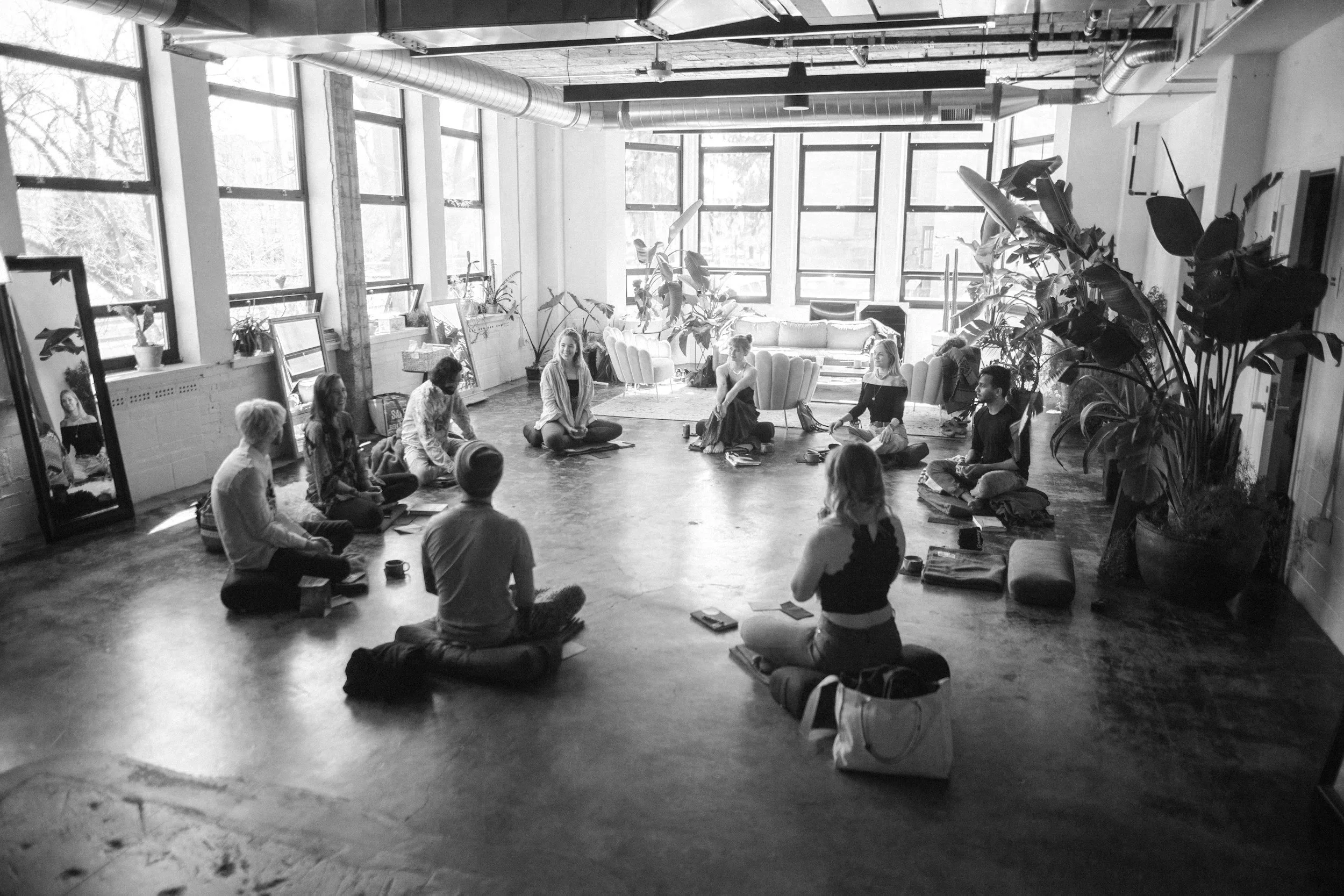
At Breathing Space, breathwork coaching is taught as a relational practice, not just a set of techniques.
Alongside practical skills and ethical foundations, we place a strong emphasis on community, integration, and ongoing support. Learning to guide others with the breath isn’t something we believe should happen in isolation.
Learning within a supportive community
Those who train with Breathing Space are warmly invited into an ongoing learning community. This includes:
regular online gatherings where graduates can reconnect, reflect, and ask questions
live masterclasses exploring different aspects of breathwork, facilitation, and nervous system awareness
opportunities to continue learning alongside peers at different stages of their journey
Participation is always optional. Some people engage actively; others dip in when it feels supportive. Both are welcome.
Opportunities to teach and practise in real-world settings
For those who wish, there are also opportunities to gain experience by supporting or guiding breathwork within the wider Breathing Space ecosystem. This includes:
the chance to teach or co-facilitate in our free online breathwork sessions, which welcome an international audience
opportunities to practise holding space in accessible, well-held environments
exposure to a diverse range of participants, experiences, and nervous systems
These experiences are offered as learning opportunities and are supported with clear structure and expectations.
A culture of ethics, pacing, and choice
Our approach to training reflects the same principles we teach:
safety over spectacle
depth over speed
consent over compliance
There is no pressure to teach publicly, grow quickly, or turn breathwork into a business. Some graduates remain primarily learners. Others gradually step into facilitation, teaching, or further training. The pace is always led by the individual.
A pathway that stays connected
For those who choose to continue, the Breathwork Coach Certification also connects into our wider training pathway, including the 400-Hour Breathwork Facilitator Training. This allows learning to deepen over time, within a framework that remains consistent in its values and support.
Whether breathwork coaching becomes a small part of your life or something more central, we aim to offer a learning environment that feels supportive and connected.
An Invitation
Exploring breathwork coaching doesn’t have to begin with a commitment. Often, the most supportive next step is simply to experience the work, ask questions, and see how it feels in your body, not just in your head.
At Breathing Space, we offer a few different ways to do exactly that.
If you’re curious about breathwork as a profession, you’re warmly invited to join one of our Open Information Sessions. These are relaxed, conversational spaces where we talk honestly about breathwork careers, training pathways, scope of practice, and what it’s actually like to train with us. There’s plenty of room for questions, and no expectation to sign up for anything.
If you’d prefer a quieter, one-to-one conversation, you’re also welcome to book a free discovery call. This is simply a chance to talk things through, explore whether breathwork coaching feels like a good fit for you right now, and ask any questions you may be holding.
And if you’d like to experience breathwork directly, we offer free online breathwork sessions open to an international community. These sessions are often guided by our trainees and graduates, offering a chance to see the quality, care, and presence they bring to the work, and to feel what breathwork is like when held in a trauma-sensitive, well-supported way.
When you feel ready for a more structured step, the 50-Hour Breathwork Coach Certification is there as a clear, ethical foundation. But readiness doesn’t look the same for everyone, and it doesn’t have a deadline.