
Can Breathwork Release DMT?
What's Covered
The Science & The Mystery: Does Breathwork Actually Release DMT?
How the Breath Shifts Consciousness (Without the Hype)
Psychedelics vs. Breathwork: The Power of Agency
Safety, Trauma, and the Danger of "Pushing Through"
Try It Yourself: A 3-Minute CCB Taster
It’s funny watching the Google search terms that bring people to our page. We get “Does Breathwork Release DMT" really frequently. People want to know if DMT breathwork is legit, if it’s dangerous, what breathing techniques you can use to achieve it, and mostly, if they can actually trip just by lying on their living room floor and breathing. So I thought I’d write an actual piece about this answering the question with the facts we currently know.
It is an incredibly tempting prospect. And let’s be completely honest, it’s pretty common to want an escape. When you have been through the wringer, or you are simply exhausted by your own recurring internal monologue, wanting a "trip" is a completely legitimate desire. Plant medicines and psychedelics are having a massive renaissance right now because they bypass the conscious mind, soften our rigid defences, and unlock things that our everyday waking state is actively getting in the way of. In fact, they are one of the main reasons I’ve been sober for the past 3 years (but that’s another story!).
This powerful bypass is exactly why so many people are drawn to high-ventilation practices like Conscious Connected Breathwork and holotropic breathwork. They want to get underneath their own consciousness and breathwork can be an incredibly powerful way of doing this.
But, it comes with some caveats. We need to be mindful about our intention in using it. There is a profound difference between mindless escapism such as checking out just so you don't have to feel, and choosing to be an active, curious explorer of your own internal worlds.
It’s also important to know that these more intense, altered-state styles of breathwork are not the best fit for everyone. If your nervous system is already highly dysregulated or you are struggling with active mental health concerns, pushing for a massive breakthrough can sometimes backfire.
This post breaks down what is actually happening in your nervous system during an intense breathing session and we will look at the science and the myth of the spirit molecule.
The reality is that you probably aren't naturally releasing DMT on your living room floor. But what your body is actually doing is arguably much more useful and equally as powerful. You are learning how to radically shift your state of consciousness from ordinary states to non-ordinary, process heavy emotional weight, and find genuine awe, all while keeping both hands firmly on the steering wheel.
The Science & The Mystery: Does Breathwork Actually Release DMT?
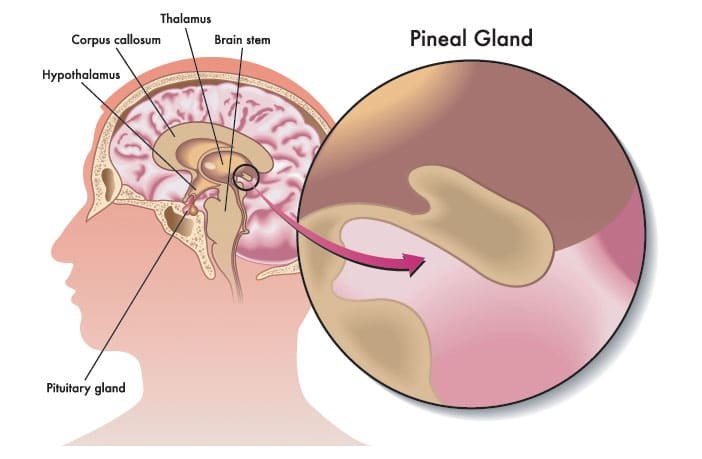
Pineal gland in the brain where DMT is made
To figure out what’s actually happening on the mat during an altered state Breathwork session, we first have to look at what DMT is.
Dimethyltryptamine (DMT) is a naturally occurring compound found in various plants and animals. It is famous for its intense, often reality-bending psychedelic effects. In the human body, it is believed to be produced in trace amounts in the pineal gland, a tiny, pinecone-shaped structure deep in the brain that spiritual traditions have long revered as the "seat of the soul" or the third eye.
Because high-ventilation practices like Conscious Connected Breathwork or holotropic breathwork can induce vivid imagery, deep emotional catharsis, and a sense of temporarily leaving the physical body, a popular theory emerged. The idea was that rapid, heavy breathing stimulates the pineal gland, causing it to dump a massive dose of endogenous (naturally occurring) DMT directly into the brain.
It is a beautifully poetic idea. But scientifically? We just don't have the hard proof to back it up (mostly because breathwork is woefully understudied!)
Current research shows zero concrete evidence that a breathwork session produces the physiological flood of DMT required to cause a true psychedelic trip. The amounts of DMT naturally present in our brains are likely far too small to create that kind of seismic shift on their own.
But here is the brilliant part: it doesn't actually matter.
Just because science hasn't proven a DMT release doesn't mean the experiences people are having aren't real. The profound emotional releases, the vivid visualisations, the life-altering realisations, they happen every single day in breathwork sessions. We don't need a "spirit molecule" to validate the experience. The magic isn't in a single chemical; the magic is in the profound, systemic way you are altering your nervous system.
How the Breath Shifts Consciousness
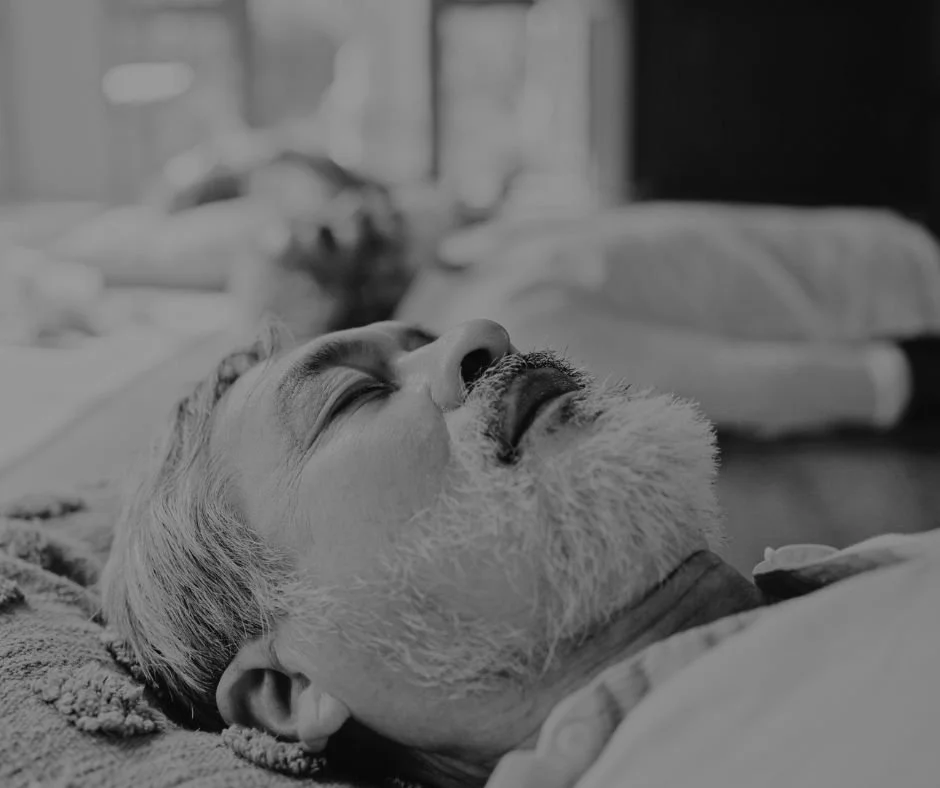
If we aren't releasing DMT, then why does an hour of Conscious Connected Breathwork often leave people feeling like they have travelled to another galaxy and back?
The answer lies in some fascinating, highly tangible shifts in your physiology. You don't need mystical explanations when the biology is this good. Here is what is actually happening under the hood when you engage in high-ventilation breathing:
The Chemical Shift and the Ego Drop
When you breathe in a continuous, connected loop without pausing, you are intentionally blowing off a significant amount of carbon dioxide. This drop in CO2 causes your blood vessels to gently constrict, which slightly reduces blood flow to the cortex of the brain.
While that might sound a bit alarming, in a safe, controlled setting, it is exactly what we want. This temporary shift quiets down a specific area of the brain called the Default Mode Network (DMN).
The DMN is essentially your brain's CEO. It is the loud, analytical inner critic that manages your ego, worries about the future, and ruminates on the past. Interestingly, one of the primary ways psychedelics work is by suppressing this exact same network. When the DMN goes offline during breathwork, your rigid defences soften. You stop overthinking, the boundaries of your "self" dissolve slightly, and you finally get out of your own way.
The Natural High
Intense breathwork is a physical workout. It acts as a deliberate, positive stressor on the body. In response to this sustained effort, your system releases a massive wave of endorphins, along with feel-good neurotransmitters like dopamine and serotonin.
This neurochemical flood is what creates that profound sense of euphoria, lightness, and deep emotional clarity that people often experience towards the end of a session. It is a natural, entirely self-generated high that requires zero external substances to achieve.
Dropping into the Dream State (Brainwaves)
Throughout a normal, busy day, your brain operates in Beta waves, which are fast, alert, and often a little anxious. As you settle into the continuous rhythm of Conscious Connected Breathwork, that breathing loop acts like a somatic metronome.
Your brainwaves begin to slow down, dropping first into Alpha (relaxed awareness) and eventually down into Theta. Theta is a deeply introspective, dream-like state. It is the exact same frequency you pass through just before you fall asleep, or the state accessed during deep meditation. In Theta, the barrier between the conscious and subconscious mind thins out. This is where the real magic happens, allowing you to access, feel, and process stuck survival energy or memories that your waking mind usually blocks out.
Psychedelics vs. Breathwork
Let’s return to plant medicines and psychedelics for a second. As I mentioned, they are incredible tools. But the thing with a psychedelic journey is that once you consume the medicine, you have bought the ticket and you are taking the ride. You are strapped in for the next four, eight, or twelve hours, regardless of whether the experience becomes beautiful, challenging, or downright terrifying.
Breathwork offers a fundamentally different dynamic. It gives you the steering wheel.
With Conscious Connected Breathwork, you are generating the medicine internally. If an altered state starts to feel like too much, or if your nervous system signals that it is overwhelmed, you do not have to sit there and wait for a substance to wear off. You simply change your breath. You slow the pace down. You open your eyes. You feel the physical floor underneath you.
You have total, immediate agency over the depth and intensity of your own experience. That level of autonomy is incredibly important, especially for anyone navigating recovery or carrying a history of trauma. You get to be the explorer, but you also get to decide exactly when it is time to come home.
Safety, Trauma, and the Danger of "Pushing Through"

This brings us to a critical conversation about safety in the breathwork world. Because "DMT breathing" has become such a massive trend, there is a toxic narrative in some wellness spaces that you have to breathe harder, push through the pain, and endure extreme physical discomfort to achieve a "breakthrough."
If you have a history of trauma, forcing your body into an intense state of hyperventilation when your nervous system is screaming "stop" is not healing. It is re-traumatising.
True somatic healing happens when we feel safe, not when our bodies are forced open like a crowbar to the psyche. The most profound shifts often happen when we allow the breath to be fluid, gentle, and respectful of our own window of tolerance. If a facilitator ever pushes you to ignore your body's "no" in pursuit of a trippy vision, that is a red flag.
Pacing, agency, and integration are non-negotiable.
Try It Yourself: A 3-Minute CCB Taster
If you are curious about what this actually feels like in your own body, you don't need to commit to an hour-long deep dive right away. Sometimes, three minutes is exactly enough to help you understand the mechanics of the practice without overwhelming your nervous system.
Below is a short taster session guided by Benedict Beaumont, the founder of Breathing Space. In this quick video, you will learn how to breathe in a continuous, fluid loop, gently eliminating the natural pauses between your inhale and your exhale.
Before you hit play, here is a quick breakdown of how to prepare and what to do.
How to Practice Conscious Connected Breathwork (CCB)
Find a safe place to lie down: Because CCB alters your physiology and can make you feel lightheaded, you must be in a safe, supported position. Lie flat on your back on a bed, sofa, or yoga mat. (Never practice this while driving, standing, or in water).
Choose your breathing pathway: You can do this practice through your mouth or your nose. Breathing through an open mouth generally creates a deeper, more powerful shift in the nervous system. However, if that feels too intense, breathing through your nose is perfectly fine.
Drop the breath into the belly: Focus on drawing the air deep down into your diaphragm rather than shallowly into your upper chest. You might find it helpful to place a hand on your belly to feel it rise as you breathe in.
Connect the breath (no pauses): This is the core of the technique. Create a continuous, circular flow of air. The moment your inhale reaches the top, let it immediately fall into the exhale. As soon as the exhale drops away, pull the next inhale right back in.
Let the exhale go: Your inhale should be active and full, but your exhale should be completely passive and relaxed. Do not force or blow the air out; just let it drop away like a gentle sigh.
As you follow along with Benedict, keep the golden rule in mind: you are the one in the driver's seat. If you start to feel overwhelmed, or if your body simply says "no," just drop the technique. Let your breathing return to its normal, everyday rhythm.
Where to Start: Safe, Grounded Exploration
You do not need to chase a myth or force a massive chemical dump to have a life-changing experience on the mat. The breath alone, when guided with care and respect, is more than enough to help you access deep parts of yourself, process stuck emotions, and find a sense of genuine connection.
If you are curious about exploring your internal world, but want to do it in a way that honours your body's boundaries, here is how you can step into the practice safely:
Start Gently at Home: You don't have to dive straight into the deep end. Our Free Breathwork Starter Kit provides easy-to-follow, guided videos to help you safely build a foundation and learn how your specific nervous system responds to the breath. It also includes a guided CCB taster session.
Breathe With Us Live: You are warmly invited to join our inclusive free weekly breathwork sessions on Zoom. It is a space where you can explore the art and science of your own breath alongside a supportive community, with zero pressure to see the cosmos.
Learn to Hold Space: If you have experienced the power of this practice and want to learn how to guide others ethically and safely, explore our 400-Hour Facilitator Training. We focus heavily on trauma-informed design, somatic awareness, and the deep responsibility of holding space for altered states.
Frequently Asked Questions
-
"DMT breathwork" is not a specific, official technique. It is a popular internet term usually referring to high-ventilation practices like Conscious Connected Breathwork or Holotropic Breathwork. People use these techniques to try and stimulate a natural release of DMT in the brain.
While science does not currently support the idea that breathing causes a massive DMT dump, the practice does work incredibly well at producing altered states of consciousness. It achieves this by shifting your oxygen and carbon dioxide levels, quieting the ego-driven parts of your brain, and releasing a flood of natural endorphins.
-
No, practicing deep, connected breathing for an hour will not cause brain damage. However, the way some people practice it can be unhealthy for the nervous system.
The danger lies in the "no pain, no gain" mentality. Aggressively hyperventilating to force a mystical vision can trigger intense panic or re-traumatisation, especially if you have a history of trauma. Additionally, high-ventilation breathwork is contraindicated (not recommended) for people with cardiovascular issues, high blood pressure, severe panic disorders, or those who are pregnant. Breathwork is only safe and healing when you respect your body's limits.
-
Psychedelic or altered-state breathwork is typically achieved through a continuous, circular breathing pattern. You take a deep, active inhale into the belly and chest, and immediately let it fall into a soft, passive exhale, eliminating any pauses at the top or bottom of the breath.
While you can try a short 3-minute taster on your own, doing a full hour-long session should ideally be guided by a trained, trauma-informed facilitator who can hold a safe space for whatever emotions or physical sensations arise.
-
Yes. If you are looking to feel something greater, process heavy emotional weight, or simply get underneath your conscious mind, breathwork is a profound alternative to plant medicines.
While it may not perfectly replicate a strong dose of a psychedelic substance, it allows you to access deep, dream-like states (Theta brainwaves) and experience genuine awe entirely naturally. The biggest benefit is agency: you get to explore these altered states while keeping your hands firmly on the steering wheel.
-
Just like with breathwork, there is a lot of speculation but very little scientific proof that deep meditation releases endogenous DMT. Advanced meditators do experience profound mystical states, but neuroscientists attribute this to changes in brainwave frequencies (shifting into Theta or Gamma states) and the dampening of the Default Mode Network, rather than a release of the "spirit molecule."
-
If you are wondering how to feel euphoria without substances, breathwork is one of the most effective, science-backed tools we have. When you practise Conscious Connected Breathwork, you are providing a deliberate, physical challenge to your nervous system. In response to this effort, your body releases a massive wave of endorphins, dopamine, and serotonin.
As the loud, analytical part of your brain quiets down, this neurochemical flood creates a profound sense of lightness, bliss, and natural euphoria. However, there is a catch: you cannot force it. If you go into a session desperately chasing a high, you create physical tension. The euphoria almost always arrives near the end of the session, in the integration phase, when you finally stop trying to control the experience and just allow your body to rest.
-
The honest answer? Science hasn't found a proven way for us to intentionally flood our brains with endogenous DMT. You will find endless corners of the internet promising that if you do a highly specific breathing technique, sit in total darkness for a week, or chant at a certain frequency, your pineal gland will burst open, but right now, there is no clinical evidence to back that up.
But here is a better question: why are you trying to release it in the first place?
Usually, when people ask how to release DMT naturally, they aren't actually looking for a specific molecule. They are looking for the experience such as a profound shift in consciousness, a deep emotional release, or a momentary escape from the heavy, day-to-day weight of being human. You do not need to "hack" your pineal gland to get that. Practices like Conscious Connected Breathwork naturally alter your brainwaves and neurochemistry, giving you access to those exact same transcendent states using nothing but your own lungs.