
ADHD and Breathwork
What We'll Cover
- Common ADHD Breathing Problems (Why We Breathe Weirdly)
- The Science: Can Breathing Techniques Reduce ADHD Symptoms?
- 4 ADHD Breathing Exercises (That Don't Require Sitting Still)
- How to Practice When You Have ADHD (And Hate Routine)
- Why "Trauma-Informed" Matters for the ADHD Brain
- Next Steps: Starting Your Practice
- Frequently Asked Questions
“I hate breathwork.”
I have said this phrase in some form or another many many times to my husband, Ben (the founder of Breathing Space), before I finally understood my own brain. For a long time, the idea of lying in a room, listening to other people breathe loudly while I mined the depths of my inner world felt like a nightmare. Nothing ever seemed to get better. I would have intense emotional experiences, relive some trauma, but instead of feeling relief or healing like everyone else seemed to, I just felt re-traumatised.
I have ADHD, but I wasn't diagnosed until much later in life. Like many women, my symptoms were internalized. I was diagnosed with an anxiety disorder early on, and I assumed my constant restlessness, boredom, and feeling of "otherness" were just part of the anxiety package. Things that I thought made me very “efficient” were actually carefully crafted coping mechanisms that helped me muddle along, until I had children.
Motherhood shattered my coping strategies in a way I can’t even express. The constant demands, the noise, the touching, it was profound sensory overload. I couldn't sleep, my brain was a whirlwind, I was trying to cope in any way I could, including in alcohol to help quiet the noise. Eventually, after a lot of dark nights, I got help. That was when the psychiatrist gently suggested that what I was experiencing wasn't just anxiety; it was ADHD.
Understanding my diagnosis changed everything, including my relationship with my nervous system. I realized that my previous experiences with breathwork had left me feeling raw and overstimulated because I was trying to force a neurotypical practice onto a neurodivergent brain.
When I finally learned about how I can tailor breathwork practices for ADHD and other neurodiversities, it changed everything. By incorporating movement, shorter sessions, more choice, empowerment, and sensory-friendly environments, it became one of my greatest tools.
Common ADHD Breathing Problems (Why We Breathe Weirdly)
Before we look at how to use the breath to heal, we have to talk about how ADHD actually changes the way we breathe on a daily basis. If you have ever noticed yourself breathing "weirdly," you are not alone. Because ADHD is deeply tied to nervous system regulation, it frequently manifests in our respiratory patterns.
Here are a few common quirks you might recognize:
1. Involuntary ADHD Breath Holding
Do you ever catch yourself simply... not breathing? Involuntary breath holding in adults with ADHD is incredibly common. It often happens when we drop into a state of hyperfocus (sometimes called "screen apnea" when working on a computer) or when we are experiencing sensory overwhelm. We subconsciously freeze our breath as a way to brace against the world or to intensely focus our attention. In fact, I’ve just caught myself doing this as I was writing this paragraph.
2. Shallow Breathing and Shortness of Breath
Many people report having trouble catching breath with ADHD. When our brains are moving a million miles an hour, our bodies interpret that internal hyperactivity as a threat. This triggers the fight-or-flight response, causing ADHD shallow breathing. We breathe rapidly into our upper chests rather than deep into our bellies, which only signals to the brain that we need to be more anxious and so the cycle continues
3. Mouth Breathing and ADHD
There is a strong link between mouth breathing and ADHD. Chronic stress and poor sleep which are both hallmarks of ADHD, often lead to habitual mouth breathing. Unfortunately, breathing through the mouth bypasses the body's natural filtration system, decreases oxygen absorption, and keeps the body locked in a sympathetic (stressed) state, worsening brain fog and lack of focus.
4. Compulsive Exhaling and Sighing
On the flip side, you might struggle with ADHD breathing habits like compulsive exhaling or frequent, heavy sighing. This is actually your body’s incredibly clever attempt to regulate itself. A long, heavy sigh is an autonomic reset button; your nervous system is trying to forcefully release tension and stimulate the calming parasympathetic nervous system.
If you recognize any of these patterns, please know that this is just your body simply trying to manage in an overwhelming world. The good news is that we can gently retrain these habits.
The Science: Can Breathing Techniques Reduce ADHD Symptoms?
For a long time, I will be honest and tell you that I thought breathwork was just "woo-woo" nonsense that my husband was in to. But when you look at how the neurodivergent brain operates, the biological impact of the breath is undeniable. So, can breathing techniques reduce ADHD symptoms?
Yes, especially when it comes to emotional dysregulation and a lack of focus.
If you dig into the research, specifically looking for a connection between deep breathing, parasympathetic nervous system, anxiety, and adhd, the science is fascinating. ADHD is often characterized by a dysregulated dopamine system and an under-functioning prefrontal cortex (the part of the brain responsible for impulse control and focus). When our brains are under-stimulated, we go looking for dopamine hits; when we are overstimulated, we crash.
When we practice deep breathing, we physically stimulate the vagus nerve, which activates the parasympathetic nervous system (our "rest and digest" mode). This acts as a direct off-switch for anxiety, lowering cortisol levels and telling the brain that we are safe.
But here is the real magic for the ADHD brain: breathwork creates a physical pause. By consciously connecting with our breath, we create a fraction of a second between a stimulus (like a frustrating email or a loud noise) and our response to it.
The clinical data backs this up. In fact, a recent randomized trial about breathing exercises for adhd demonstrated that participants who engaged in regular, mindful breathing showed significant improvements in sustained attention and reduced impulsivity. You don't have to change who you are; you are simply giving your nervous system the biological tools it needs to self-regulate.
4 ADHD Breathing Exercises (That Don't Require Sitting Still)
When tailoring breathwork for the ADHD brain, we have to throw the traditional rulebook out the window. If sitting perfectly still for 20 minutes sounds like a nightmare, don't do it!
Here are four highly effective ADHD breathing exercises that are sensory-friendly and easily adaptable:
1. The 15-Second Reset
You do not need a long session to regulate your nervous system. The benefits of 15-second breathing exercises for ADHD are profound because they don't require immense sustained focus.
How to do it: Inhale deeply through your nose for 5 seconds. Exhale slowly through pursed lips (like blowing through a straw) for 10 seconds. That’s it. You have just successfully stimulated your vagus nerve. Do this before opening an overwhelming email or stepping out of your car.
2. Box Breathing for Focus
If your thoughts are racing and you feel entirely ungrounded, box breathing gives your busy brain a specific job to do. It occupies your working memory just enough to calm you down.
How to do it: Inhale for a count of 4, hold your breath for a count of 4, exhale for a count of 4, and hold empty for a count of 4. As you breathe, visualize tracing the four sides of a square in your mind.
Note on breath holds: Is practicing holding breath good if you have ADHD? Yes, intentional breath retention (like in box breathing) is excellent for building CO2 tolerance and calming the mind. However, it should be a relaxed pause, not a tense, involuntary freeze. It should also be done mindfully and in a safe space.
3. Diaphragmatic Breathing for Shallow Breathing
f you struggle with chest-breathing or mouth breathing, diaphragmatic breathing (or belly breathing) is your foundational fix.
How to do it: Place one hand on your chest and one on your belly. Breathe in slowly through your nose, aiming to make the hand on your belly rise while the hand on your chest stays relatively still. This tells your body that you are safe, switching off the fight-or-flight response.
4. "Sand Breathing" (Sensory Visualization)
For those of us with ADHD, our minds can often feel like a whirlwind, like trying to hold onto a handful of sand. The harder you grip, the more it slips through your fingers. Sand breathing uses this visualization to help you let go.
How to do it: As you inhale, imagine drawing a slow, steady stream of sand up into an hourglass. As you exhale, imagine the sand slowly and smoothly releasing, falling into a soft pile. Imagine all the fine details of the sand in as much as you can. This gives sensory-seeking brains a soothing, visual texture to anchor onto during the breath.

How to Practice When You Have ADHD (And Hate Routine)
The ADHD brain loves novelty and deeply resents strict routines. You might hyper-fixate on a new breathing practice for five days straight, and then suddenly the thought of doing it again makes you want to crawl out of your skin. This is completely normal. We need to work with it rather than struggle against it.
Here is how to adapt your practice so it actually works for you:
Ditch the "Perfect" Routine: Don't force yourself to breathe at exactly 7:00 AM every day. Instead, habit-stack. Do a few rounds of box breathing while the kettle boils, or practice the 15-second reset while sitting in your car before walking into work.
Let Someone Else Lead You: For people with ADHD, remembering how to do a breathing exercise, counting the seconds, and staying focused all require massive amounts of executive function. This is why guided sessions are a lifesaver. Putting on a pair of headphones and letting a facilitator guide your breathing removes the cognitive load, allowing you to just follow along.
Make it Sensory-Friendly: Traditional breathwork tells you to lie flat on your back, which can feel incredibly vulnerable and exposing for a dysregulated nervous system. Try breathing in a prone position (lying on your stomach) or side-lying curled up in a fetal position, which feels much safer.
Use Sensory Anchors: If your mind wanders, give your senses something pleasant to hold onto. Wear noise-canceling earbuds to block out distracting household noises. Use a weighted blanket to provide deep pressure therapy, which calms the nervous system. Diffuse an essential oil so your brain has a specific scent to anchor to the feeling of relaxation.
Why "Trauma-Informed" Matters for the ADHD Brain
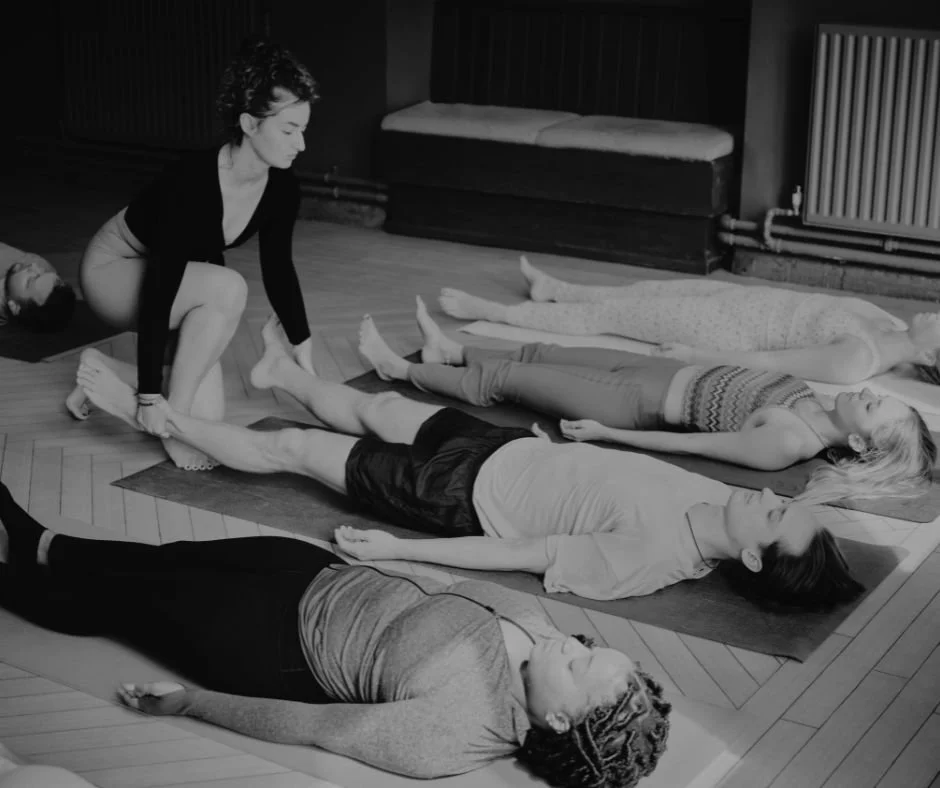
If you are neurodivergent, walking into a standard breathwork class can feel incredibly vulnerable. The lighting, the music, the breathing of the people next to you, it can all trigger immediate sensory overload. This is why finding a trauma-informed breathwork facilitator is absolutely vital.
Often, people hear the word "trauma" and assume it doesn't apply to them. But in the breathwork space, a "trauma-informed" label is really a signifier that the facilitator understands that everyone's nervous system is completely different. It means they recognize that our bodies have all experienced different things, and that there is no one-size-fits-all approach to healing.
When you have ADHD, your nervous system is already working overtime. If a facilitator uses a rigid approach, telling you to "just push through the resistance" or "breathe harder," your body will simply lock down further or risk re-traumatising yourself.
There is no progress without safety first.
You cannot force the body to relax, heal, or focus if it feels threatened. A trauma-informed facilitator prioritizes your physical and emotional safety above all else. They give you choices, offer sensory-friendly modifications, and never force an experience. They meet you exactly where you are, allowing your nervous system to finally let its guard down.
Want to Learn to Hold Space in a Trauma-Informed Way?
If you have experienced the power of the breath and want to learn how to guide others safely, ethically, and inclusively, we offer two comprehensive breathwork training pathways:
Trauma-Sensitive Breathwork Coach Certification (50 Hours, Online) : This 12-week, accredited course gives you the tools to work safely with individual clients and groups. We cover the science of the breath, the art of holding space, and session structure. You will gain the practical skills, templates, and accreditations required to launch your practice with integrity and nervous-system awareness.
Professional Trauma-Informed Breathwork Facilitator (400-Hours, Online) : Join our 10 month, comprehensive online breathwork training where you will gain the skills, global accreditation, and community support you need to step into an incredible career holding space for deeper journeys. We cover the art, science, ethics, and mastery of breathwork.
Gentle Next Steps: Starting Your Practice
Breathwork hasn't magically "fixed" my ADHD, I still have a thousand thoughts swirling around my head at any given moment. But life feels a whole lot less overwhelming. It gave me a solid framework for small changes and the resilience to navigate a chaotic world.
If you want to experience these techniques without having to lead yourself through them (and avoid the executive dysfunction of trying to remember the steps!), guided sessions are the perfect place to start.
Here are a few ways we can breathe together:
The Breathwork Starter Kit (Free): A gentle, structured introduction to functional breathing that you can do entirely at your own pace.
Free Online Breathwork Sessions: Join our live, 60-minute classes on Zoom. You can leave your camera off, lie however you are comfortable, and just listen.
The All Access Breathwork Membership: For £20 a month (or £200 a year), get unlimited access to a library of guided sessions. This is perfect for the ADHD brain because it offers endless novelty—you can choose a different track, length, or focus every single day. Try it with a 7-day free trial.
Frequently Asked Questions
-
Yes. While they do not "cure" ADHD, breathing exercises are highly effective at managing symptoms. By activating the parasympathetic nervous system, breathwork lowers anxiety, reduces impulsive reactions, and can help naturally increase dopamine levels, which improves focus and emotional regulation.
-
Indirectly, yes. Because ADHD often comes with a highly stimulated, anxious nervous system, many people with ADHD default to shallow, rapid chest breathing. This "fight-or-flight" breathing pattern can make you feel like you are having trouble catching your breath.
-
For an ADHD brain, the most effective exercises are ones that are easy to remember and don't require prolonged stillness. The 15-second reset (5 seconds in, 10 seconds out), box breathing, and diaphragmatic (belly) breathing are excellent tools to quickly calm the parasympathetic nervous system.
-
It depends on how you do it. Involuntary breath holding, like freezing your breath when you are hyper-focusing on a screen, keeps your body in a state of tension.
However, intentional breath holding, like the pauses used in box breathing, is excellent practice. It builds CO2 tolerance, which naturally calms the brain and reduces anxiety.